| Home | | | Items For Sale | | | Shops | | | Current Auctions | | | Auction Information | | | Auction Schedule | | | My Vervendi | | | Seller Registration | | | Bidder Registration (free) |
| Directory: Japanese (12523) |
|
Auctions MAIN CATEGORIES
|
Haruko Watanabe
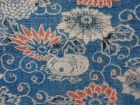
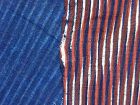
Sold, Thank you. Fragment of katazome with mum motif, made of handspun cotton, dyed with natural dye, such as benibana (safflower), sumi (ink) and vegetable indigo. One side has much faded colors, but the other has a bit more vivid colors. The first half of the 19th century. In good condition. W:34cm, L:72cm
Haruko Watanabe
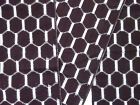
Sold, Thank you. A roll of cotton cloth (tanmono) of the Kurume kasuri with Kikko (hexagonal), tortoiseshell pattern. Kurume kasuri was invented by Inoue Den around 1800, a woman lived in Kurume in Fukuoka prefecture in Kyushu. This cloth is for a kimono. The technique of weaving kasuri in Kurume changed from handloom to machine weaving around 1883.
In excellent condition with warranty tags. 20th century. 38.5cm x 11m40cm
2ezr
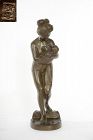
Inquire for Price 1920's Japanese Kano Seiun 加納晴雲 Bronze Nude Geisha Holding Baby Okimono Signed
It is 18 inches (45.72 cm) tall by 5.5 inches (13.97 cm) wide. It is 12.5 Lb. It has minor oxidation and surface wears and scratches (as seen in the photos). Our Guarantee: We stand behind all of the items that we sell. That is to say, if you purchase an item from us and are unhappy with it for any reason, return it for a 100% refund of the amount you originally paid...
Zentner Collection
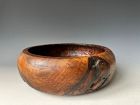
$750.00 Hawaiian burled koa wood bowl. The original finish with iridescent shimmer and luscious color, which ranges from tan to warm gold with brown and black accents. Great condition ready to be enjoyed. Signed W J. Brown #347
The word Koa translates to warrior in Hawaiian, symbolizing strength and courage. At one point in time it was reserved only for royals. With its rarity and durability. Age: 1995 Dimensions: 13 1/2" wide x 4 1/4" high
Haruko Watanabe
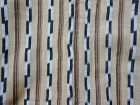
Sold, Thank you. A piece of Iyo-zome cloth which is made of hand-spun cotton and has katazome (stencil-resist-dye) pattern. The name Iyo-zome is originated from Iyo sudare (bamboo screen) since the pattern looks like wood grain by looking through two layers of them. Stripes are dyed with two katagami (stencil paper), one is vegetable indigo and the other is natural brown dye. Two katagami are dyed by displacing them so that they make wood grain like pattern...
Haruko Watanabe
Sold, Thank you. Asa (hemp or ramie) unlined kimono with kasuri and stripes pattern, which is natural dye. In excellent condition. 20th century. W:128cm, L:156cm
Zentner Collection
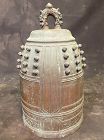
$2,600.00 This is an antique Japanese Buddhist bronze temple bell called Bonsho with Nyu protrusions for sound quality and a top handle for on a rope or chain. The handle features two diverging dragons that protect the spirit of the bell. Beautiful aged patina with an inscription incised on the side.
Age: Edo Period (1800-1850) Dimensions: 11.5" Diameter by 19.5" High
The Kura
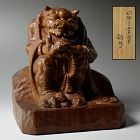
sold A devil dressed in priest robes hunches down, prayer beads clutched in one gnarled claw, an incense burner held up to his sleepy visage, a humorous image carved from a single block of wood by Hirata Masaya (1900-1980) enclosed in the original signed wooden box dated Showa 35 (1960) and titled Sui-ko (Drunk on Incense). It is 25 x 20 x 26.5 cm and is in excellent condition.
Modern Japanese Ceramics
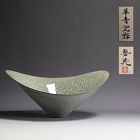
sold, thank you Ready to soar off the table, a magnificent basin by Minegishi Seiko enclosed in the original signed wooden box titled Suiseiji Utsuwa. The glaze is like layers of shattered ice, mirror smooth and emerald (actually Jade according to the title). It is 46 x 30 x 20 cm (18 x 12 x 8 inches) and in perfect condition.
Born in 1952 in Saitama, Minegishi Seiko studied under various masters in Nagano, Tochigi and Ibaragi, going solo at the young age of 22...
Conservatoire Sakura
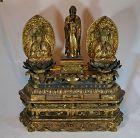
$15,000.00 Buddha in black lacquered wood, gilded with gold powder, The layer of urushi is very thick, despite the centuries it has remained intact, still adhering perfectly to the wood, it is worn, split but no place is chipped, a sign of the excellence of the lacquer artists of medieval Japan. The deity is represented standing, her hands and feet are amputated, which does not harm her aesthetics...
t a t a m i
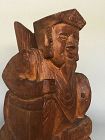
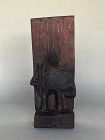
$200.00 SQUARE EBISU Unique type of anonymous Japanese folk wooden statue of Ebisu god holding a sea bream like its halo primitively carved out from a square timber applying ts original squareness, Showa 52 (1977), H 21 x 10 x 10 cm (8.26 x 3.93 x 3.93in) selected by Pottari * Please understand that EMS shipping fee is additionally charged, and also confirm our Sales Policy before purchase, since your order will be as...
t a t a m i
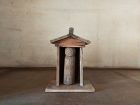
$250.00 RUSTIC PHALLUS IN ZUSHI SHRINE Wood. Showa period, 20th century, Japan...
t a t a m i
$300.00 MAN OF DRIED LACQUER Dried lacquer statue like a Nio (Guardian god) or Samurai with wooden plate, by a Japanese artist (as cartoonist and lacquerer), Michihiro Hori...
Zentner Collection
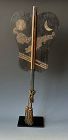
$975.00 The gunbai (gunbai-uchiwa) is a type of signal baton and Japanese war fan. Once held by military leaders (such as daimyō) and priests in the past, it is used in the modern day by umpires in sumo wrestling.
Lacquered in black with swirling clouds, and moon with sun shown on both sides.
Gunbai, from the Sino-Japanese roots meaning "military-apportioned [fan]", were a specialized form of fan used by samurai officers in Japan to communicate commands to their troops...
Japanese : Woodblock Prints : Pre 1980
item #1495482
(stock #Hoshi009)
Era Woodblock Prints
SOLD Joichi Hoshi (1911-1979)
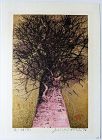
High Treetop (Red) (Takai Kozue - Aka) Date: 1976. Sheet size: 8.875 x 6.625 inches (22.5 x 16.2 cm) Signed, titled, and dated in pencil. Medium: Japanese woodblock print. Condition: Faint matte toning visible outside the image. Notes: We've added both photos and scans, one of which shows the lovely metallics.
Momoyama Gallery
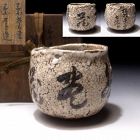
$595.00 Very rare poetic Setsu-getsu-ka Shino Chawan, formed and engraved by hand by Katō Sōsetsu ( 1834-unclear ). A potter born in what is known as the Edo period. Subject bowl is hand shaped, made without use of the potter’s wheel. A ceramic technique called kurinuki in Japan. Setsu-getsu-ka (Setsugekka 雪月花, lit. 'Snow, Moon and Flowers') is written on the tea bowl (the other characters are hard to identify)...
Modern Japanese Ceramics
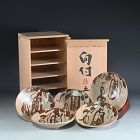
sold, thank you A set of Gohon glazed dishes decorated with Akebi mountain fruits by Komatsu Kin (Hitoshi) fired at the Fuki Kiln enclosed in the original signed and compartmentalized wooden box also decorated inside the lid with the same hanging fruit. Each dish is roughly 16 cm (6 inches) diameter and all are in perfect condition.
Komatsu Kin (Hitoshi, 1902-1989) was born as the son of Buddhist priest Komatsu Baiyu, Head of Enmeiji Temple in Yamagata prefecture...
Japanese : Woodblock Prints : Pre 1930
item #1495439
(stock #YoshidaH073)
Era Woodblock Prints
SOLD Hiroshi Yoshida
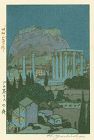
The Acropolis at Night (Moon Light in Acropolis). Date: 1928. First and only edition. Image size: 5 x 3.25 inches (12.8 x 8.2 cm). Paper size: 10.125 x 7.125 inches (25.8 x 18.3 cm). Pencil signed in margin. Signed "Yoshida" in the image along with red "Hiroshi". This design was never issued with a jizuri seal. Reference: Abe catalog #116. Medium: Japanese woodblock print. Condition: Paper is faintly foxed. |