| Home | | | Items For Sale | | | Shops | | | Current Auctions | | | Auction Information | | | Auction Schedule | | | My Vervendi | | | Seller Registration | | | Bidder Registration (free) |
| Directory: Japanese: Textiles (1033) |
|
Auctions Shops Active In This Category
MAIN CATEGORIES
|
japanes antique textile saiyuu2
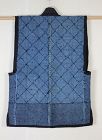
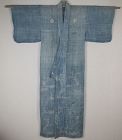
sold than you This is Shonai Sasiko made in the Edo period. This is an item made by Sashiko craftsmen during the Edo period. And it is a very rare design sashiko. This is the work clothes that a wealthy merchant had as one of his daughter's wedding supplies. The front side is dark indigo dyeing. The back side is a blue color called hanada. There are almost no traces of use and it is in good condition. You can wear it and enjoy it...
japanes antique textile saiyuu2
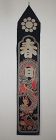
sold than you This is a Japanese antique tsutsugaki of indigo dye of shika odori Traditional dance Ornament.
This has light stains and small holes.They are not disturbing, and as a whole it is in very good condition.
Size:Length:152cm( 59.8inch ) Width:: 27cm(10.62inch)
shika (Deer) dance is a traditional dance that has been handed down in the Nanbu territory of the Edo period and the Mutsu territory of the Date clan, that is, around the present Iwate and Miyagi prefectures.
There is something in com...
Zentner Collection
SOLD Japanese Antique Kesa Cloth (Buddhist Priest's Vestment) made with prized brocade displaying the crest of the Tokugawa shogunate and framed with a rare purple and gold silk brocade with red accents. The "triple hollyhock" mon belonged to the Tokugawa feudal military government of Edo Japan (1600-1868).
Often described as a mantel or robe, the kesa is worn draped diagonally over the left shoulder and under the right armpit...
japanes antique textile saiyuu2
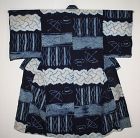
$3600.00 This is a Japanese antique indigo dye cotton asamai-shibori Charming & Rare design of edo.
Very handy and thick handspun & natural indigo dye cotton.
This is an indigo-dyed cotton squeezer made in Asamai during the Edo period. The pattern is a four-step change pattern. The "Hat" and "Umbrella" patterns that are familiar to the general public in Western civilization were adopted from the city.
I think it caught the eye in the Asamai area of Akita Prefecture...
Zentner Collection
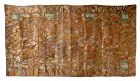
Sold Japanese antique rectangular kesa or priest/monk's outer vestment cloth. The silk brocade of this kesa is a pale orange color and finely woven with colorful designs of dragons in clouds. The silk is Imperial Chinese, as shown by the five clawed dragons. Lined with dark blue silk.
Often described as a mantel or robe, the kesa is worn draped diagonally over the left shoulder and under the right armpit...
Zentner Collection
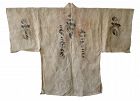
$875.00 Antique Japanese Buddhist Pilgrim's coat. Buddhist monks associated with the teachings of Kukai (or Kobo Daishi) would embark on a pilgrimage to visit the 88 temples on the island of Shikoku. Upon arriving to each temple, the monk would bathe before giving offerings and reciting prayers as well as receive a stamp distinctive to each temple. Normally a monk would carry around a special stamp book however it is not unusual to stamp the monk's coat as seen here...
Haruko Watanabe
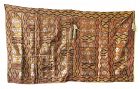
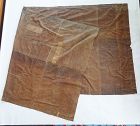
$350.00 Huge maku (curtain) made of many sake-bukuro which are recycled. It has many mending patches and stitches. The first half of the 20th century. 2m56cm x 128cm
Welcome To Another Century
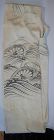
$140.00 A long woman’s summer obi made of thin silk, woven in jacquard and openwork techniques with chrysanthemums or asters interlaced with fences of plaited bamboo leaves. On this, in Yuzen dye technique, imitating an ink drawing, several areas painted with cart wheels floating in waves.
The obi has been opened; a practice quite common in order to have the material cleaned. There is a paper (dry) cleaner’s tag on the obi. Japan, ca. 1950s. L ca. 13 ft, H ca...
Welcome To Another Century
Please enquire Long obi, woman’s sash for fastening a kimono. Silk with decoration in yuzen silk painting technique and silk and gold- and silver-thread embroidery. The story of Momotaro, Peach Boy, fully illustrated. The old couple, Momotaro’s foster parents, the boat that brings Momotaro and his friends the dog, the monkey and the pheasant to the island of the demons (Onigashima), the demons surrendering the treasures they stole. Momotaro, with the banner ‘Nihonichi’ (no...
Haruko Watanabe
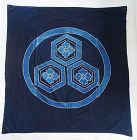
Sold. Thank you. Furoshiki (wrapping cloth) made of hand-spun cotton and vegetable indigo dyed. The crest is hand-drawn by tsutsugaki
technique. It has sashiko on the four corners. In excellent condition except for a cut (1cm) in the crest. The second half of the 19th century. 135cm x 137cm
Haruko Watanabe
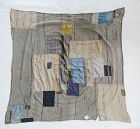
Sold. Thank you. Boro furoshiki with many mending patches with various cloth and interesting mending stitches. The ground cloth is thin cotton cloth in gray. The first half of the 20th century. 126cm x 126cm
Haruko Watanabe
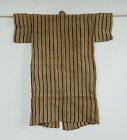
Sold. Thank you. Bashofu kimono hand-woven of banana fiber for both wefts and warps. The yarn is rather thicker and tougher comparing with very fine yarn for thinner and higher quality bashofu, so that it is for a everyday kimono or work wear. Brown stripes are also banana fibers. Late 19th to early 20th century. In good condition except for a mending near the lower side in the back and wear near neck. 104cm x 115cm
Zentner Collection
$450.00 Japanese small kesa, Buddhist priest's vestment cloth to be worn over robes. Often described as a mantel or robe, the kesa is worn draped diagonally over the left shoulder and under the right armpit. Meant as a reminder of the Buddha's own simple patched garment, kesa are formed from fragments of cloth donated to the temple by wealthy devotees. Within each garment, the fragments are typically organized in a series of columns framed by a border with angled corners...
Zentner Collection
$1,850.00 Antique Japanese long silk altar cloth embroidered with three phoenix birds, also called Hou-ou birds. The mythical birds represents fire, sun, justice, obedience, fidelity, and the southern constellations. The phoenix also symbolizes the imperial household, specifically the empress. The embroiderer expresses flowing movement in in the wings and feathers of the great birds.
Age: Edo Period (early 1800's) Dimensions: 23 1/2" high x 145" long
japanes antique textile saiyuu2
$880.00 This is japanese antique tsutsugaki Umakake used in the Tohoku region of the Edo period...
Zentner Collection
SOLD Japanese antique rectangular kesa or priest/monk's outer vestment cloth. This asa (hemp) kesa is a yellow/gold color and finely woven with a design of phoenixes and clouds.
Often described as a mantel or robe, the kesa is worn draped diagonally over the left shoulder and under the right armpit. It is meant as a reminder of the Buddha's own simple patched garment, kesa are formed from many fragments of the same cloth. Within each garment, the fragments are typically organized in a...
japanes antique textile saiyuu2
$1280.00 Japanese antique indigo dye soft Choma Ramie tsutsugaki katabira kimono of echigo-jyofu.There are thin Stain and discoloration and small holes.
It is a Kyoho era(1716-1736). Shochiku Umebun's bamboo is reminiscent of flowing water, and there is movement, and a delicate and flowing pattern is expressed throughout. Sprinkling sparrows here and there and adding moving sparrows to bamboo that looks like running water is a good combination of "bamboo sparrow" and "Shochiume" pattern. It seems to be...
Zentner Collection
Price on Request A reversible leather firefighter's hanten 半纏 (heavier weight coat made popular in the 18th century).
At this time in Japan, fireman were vollenters and carried other professions.
In this case, The inside logo represents that the wearer would have been a high ranking carpenter for roof making.
Features tsutsugaki 筒描 (resist dying process) using the smoke of pine needles to produce the light patterns, and ink to dye the black side. The black sleeves appear to have been... |