| Home | | | Items For Sale | | | Shops | | | Current Auctions | | | Auction Information | | | Auction Schedule | | | My Vervendi | | | Seller Registration | | | Bidder Registration (free) |
| Directory: Japanese: Textiles (1018) |
|
Auctions Shops Active In This Category
MAIN CATEGORIES
|
japanes antique textile saiyuu2
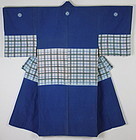
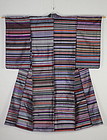
$380.00 This is Noshime used in a district for the Meiji period. This is woven with silk and cotton. The line of the part of the waist is drawn on this freely by hand. This has several places of changes of color of the aging, but does not stand out. This does not have damage. This is Kyougen clothes used in a local side. In the present age, this is not seen very much.
Size 130cm x 131cm (51.1 "x 51.5")
japanes antique textile saiyuu2
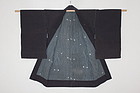
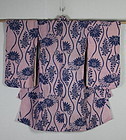
$280.00 This is cotton Haori used in Kyoto for Edo period. As for this, the surface side is a stripe pattern, and the inside is Katazome- dyeing.
The inside Katazome dyeing is a design of the grain of wood. As for this, cotton is spun by hand and is thick.
In the upper part of the sleeve right as for this 4cm (there is a tear of 1.5 “).) And there is a tear of 10cm (3.9 ") in the upper part of the left sleeve. There is not the stain damage elsewhere...
japanes antique textile saiyuu2
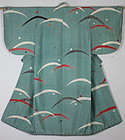
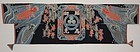
$280.00 This is costume of Kabukino of the Taisho era. Sasani-tuyu of the pattern is bamboo grass and the dew.
There are some a few stains of the aging, but does not stand out. There is not the damage, and the state is complete. Size 127cm x 119cm (50 "x 46, 8")
Zentner Collection
SOLD A charming and Unusual Japanese silk short coat meant to be worn as an over kimono. Many vivid, colorful silk panels have been patched together to create an interesting pattern. Designs of peonies, chrysanthemums, geometric patterns, cranes, butterflies, and many more are seen among the various silk panels.
Meiji period textile (1868 - 1912) assembled in the Taisho Period.
Size: 41" height, 48" width
japanes antique textile saiyuu2
$380.00 This is cotton child Kasuri kimono of Edo period. As for this, a pattern is Hagoita, Hane and Hami of the harness. Hagoita play is play of New Year holidays. As for this, Yokote Kasuriga is used for Edo period of Akita. This has two or three places of stains, but does not stand out. This does not have damage. The state is complete.
Size 90cmx 91cm (35.4 "x 35.8")
japanes antique textile saiyuu2
sold thank you This is personal ornaments of a horse used in the Tohoku district for Edo period. The item giving glory to a horse is called Umakake. This is dyed with a natural indigo plant and other dye. As for this, a thread spun by hand by cotton cloth is used. The influential person of the village had this type of item. In this district, the upper Tsutsugaki technology was used for the personal ornaments of the horse...
Welcome To Another Century
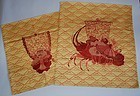
$250.00 Pair of golden yellow silk fukusa or gift covers, with diamond pattern with water birds design in brocade weave, over which is embroidered in different hues of pink and in goldthread. The larger fukusa is decorated with a lobster carrying a treasure boat, holding several of the treasures. The smaller fukusa is decorated with a treasure boat, as well. Reverse decorated in brocade technique with a family crest in white silk. Japan, Taisho or Showa era, ca...
japanes antique textile saiyuu2
sold thank you This is the kimono which the child of a rich merchant's family wore for Edo period. This is dyed in local Yuzen dyer. Basics are dyed by 80% in Tsutsugaki, and be colored in a freehand drawing successively, and this is added. The Yuzen dyeing is very rare with the kimono for children. As for this, hemp yarn spun by hand is used. As for this, the part on both sleeves is sewed. It is because the balance of the pictorial representation of this child kimono was thought about...
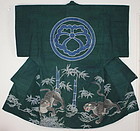
This is good-quality Yogi of Tsumugi-Silk used in the Tohoku district at the end of Edo period. Yogi which it is polychromatic, and was dyed is an upper item.
This is one of the upper wedding ceremony items. As for this, basics are dyed in indigo plant and Kariyasu. At first this is dyed in Tsutsugaaki, and 90% are finished, and a part of the tiger is pictured freehand carefully successively...
japanes antique textile saiyuu2
$150.00 This is a child kimono of a merchant's family used in Shonai for Edo period. Probably this was used as a gorgeous kimono carefully. Put it on top of one another, and this was worn. This is a jacket. This does not have stain damage. The state is complete.
Size 116cm x 108cm (45.6 "x 42.5")
japanes antique textile saiyuu2
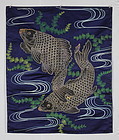
sold thank you This is Fukusa used in Kyoto for Edo period. As for this, two carps are expressed very boldly. As for this, a carp is expressed in a silver thread. This does not have a stain and damage.
As for this, a state is complete.��Lining is a red silk.
Size 74.5cm x 62.5cm (29.3 "x 24.6")
japanes antique textile saiyuu2
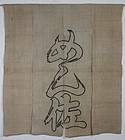
$320.00 This is thick hemp Noren of the Meiji period. As for this, words are dyed with black dye. The words are written as Mensa. Probably I think this to be an item of the business to sell noodles. This has several places of thin stains, but does not stand out. The state is good.
Size 135cm x 122cm (48 53.1 "x")
japanes antique textile saiyuu2
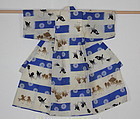
$180.00 This is muslin Katazome kimono of the Taisho era. As for this, a pattern is a shadow picture. Children carry a child miniature shrine on their shoulder and enjoy the festival for children.
There are a small hole and stain in several places. Size 75cmx64cm (29.5 "x25.1")
japanes antique textile saiyuu2
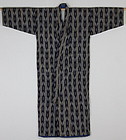
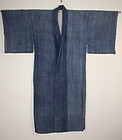
$280.00 Japanese antique Indigo dye cotton gotaiten-shibori ro-old kimono Taisho period(1912-1924).It has a thin discolorations .However, It is no damage.They are not disturbing, and as a whole it is in very good condition.This kimono does not have lining.
size:Length 132cm (51.9")
sleeve to sleeve 126cm (49.6")
japanes antique textile saiyuu2
$700.00 This is a japanese antique very rare Ramie( choma )child kimono used for edo in Kyoto. This is dyed in natural indigo plant and Benibana. This is colored the both sides into in Katozome. This hemp is spun by hand. This has five places of small stains, but does not stand out. There is no damage really. The state is complete. Size 123cmx 121cm (38.1 "x 38.9 ")
japanes antique textile saiyuu2
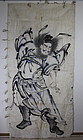
sold thank you This is Nobori-Paper used in a house in the Edo era. The pattern of this Nobori-Paper is Shoki. Shoki is an old Chinese soldier. This is made with paper. The rim of this Nobori-Paper is protected in hemp thread.� This is hardly left now. Most of left flags are textiles.
This has many stains, damage, but there is value for a document very much.
Size 223cmx 116cm (87.7 �g x 45.6 �g))
japanes antique textile saiyuu2
$680.00 This is Tsumugi-Silk Zansi kimono used in Niigata in the end of the Meiji era.
This Tsumugi-Silk is spun by hand. This is thick.
As for this, very good-quality dyed Tsumugi-Silk is used for a weft.
As for this, the warp is a cotton thread. You can enjoy gradation of colorful silk thread. As for this, cotton cloth and muslin cloth are used for lining. There are many small holes on the muslin cloth. However, the state that a dress material does not have the stain damage at all is complete...
Zentner Collection
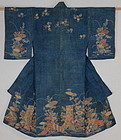
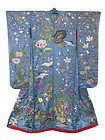
SOLD Beautiful Japanese antique wedding kimono of blue silk and embroidered all over with charming traditional wedding scenes of cranes and turtles, shochikubai (the three friends of winter) pine, plum and bamboo and a profusion of different flowers including chrysanthemums, magnolia, peonies, and camellias. Extensive use of gold embroidery. Lined in red silk and padded at hem. Meiji Period.
Size: 66" high x 49 1/2" wide
|