| Home | | | Items For Sale | | | Shops | | | Current Auctions | | | Auction Information | | | Auction Schedule | | | My Vervendi | | | Seller Registration | | | Bidder Registration (free) |
| Directory: Japanese (12523) |
|
Auctions MAIN CATEGORIES
|
Modern Japanese Ceramics
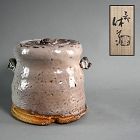
sold, thank you Lavender tinged crawling pale glaze covers the soft porous clay of this classically inspired Mizusashi by Living National Treasure Miwa Kyusetsu XI enclosed in the original signed wooden box titled Shiro-hagi Mizusashi. It is 20 cm (8 inches) diameter, 18 cm (7-1/4 inches) tall...
Modern Japanese Ceramics
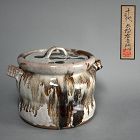
sold, thank you A superb example of Karatsu ware by Nakazato Tarouemon enclosed in the original wooden box titled Tataki Chossen Karatsu Mimitsuki Mizusashi signed Jusandai Tarouemon. The pale clay is covered in white with color fingering its way through in permeated drips from the rim. The vessel is 19 cm (7-1/2 inches) diameter, 16 cm (6 inches) tall and in excellent condition...
Japanese : Woodblock Prints : Pre 1970
item #1479161
(stock #Koitsu727)
Era Woodblock Prints
SOLD Tsuchiya Koitsu
Maiko Sea Shore Date: 1936. Size: Chuban. Approximately 10.75 x 7.75 inches. Publisher: Doi Hangaten. Printer: Yokoi. Carver: Harada. This combination of seals indicates an early postwar edition. Reference: TK-DH-23 in Koitsu catalogue. Medium: Japanese woodblock print. Condition: Back has one tape remnant at top right and a small foxing spot. Slight fading.
Japanese : Woodblock Prints : Pre 1970
item #1479146
(stock #Koitsu726)
Era Woodblock Prints
SOLD Tsuchiya Koitsu
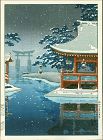
Snowy Miyajima Date: 1936. Size: Chuban. Approximately 10.75 x 7.75 inches. Publisher: Doi Hangaten. Printer: Yokoi. Carver: Harada. This combination of seals indicates an early postwar edition. Reference: TK-DH-25 in Koitsu catalogue. Medium: Japanese woodblock print. Condition: Back has one tape remnant at top right. Slight fading.
Zentner Collection
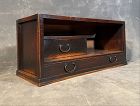
SOLD An antique Japanese Okidoko (low display stand) made of Keyaki (Zelkova) wood. Used in a Tokonoma as a portable display stand atop which decorations like scrolls were hung or flower arrangements were displayed. Drawers were used to store items for display and the interior shelves were used to display seasonal items. All original bronze hardware.
Age: Meiji Era (1890-1900). Dimensions: 31 1/4" Wide by 12 1/4" Deep by 14 1/4" Deep
Zentner Collection
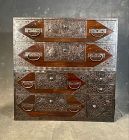
Price on Request A rare antique Sado Island Kasane Tansu made of Kiri (Paulownia) wood. All original hand forged iron hardware including the Warabite handles and original Urushi lacquer finish. All hardware was custom made with no two matching parts. The locking plates feature many auspicious symbols including Ebisu, Daikoku, the Lion Dancers, a crane, two turtles, a Fu Dog and an old wise man...
The Kura
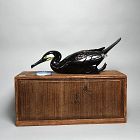
sold, thank you A beautifully crafted image of a cormorant seeking fish by Ishida Rainosuke enclosed in the original signed wooden box dating from the early 20th century. The bird is 38 cm (15 inches) long and both bird and fish are in excellent condition. A very interesting treatment of the position of the back foot shows the bird kicking, as if speeding up, eye on the prize...
Japanese : Tea Articles : Pre 1700
item #1479096
(stock #TRC230607)
Kyoto Ceramics and Fine Art
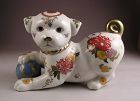
Sold, Thank You! From a 2006 excavation site in Tokyo known to be occupied by the Owari Tokugawa clan—the most senior contingent of the Tokugawa clan that united Japan under one rule—this lovely Mishima tea bowl has been given a new lease on life with a gorgeous and detailed kintsugi repair with maki-e gold painting... The size of Puppy: 9" Long x 5 3/4" High x 4" Deep.
This is beautiful Porcelain Puppy Dog. It has marking on the bottom "HANDPAINTED, FINE PORCELAIN, 1987.THE FRANKLIN MINT." It has marking of Yuki, in square. The Puppy holding blue ball. The decoration Design done in many form of Kiku, Japanese Chrysanthemum design Painted in detail with gold. The condition of puppy is excellent. No chip, no crack and no hairline...
Japanese : Tea Articles : Contemporary
item #1479036
(stock #TRC230603)
Kyoto Ceramics and Fine Art
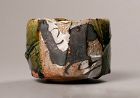
Sold, Thank You! A harmonious blend of traditional craftsmanship and contemporary artistic expression, this extraordinary tea bowl encapsulates the essence of Oribe pottery while infusing it with a fresh and modern interpretation. The surface of the tea bowl (chawan) is adorned with a striking interplay of colors and textures. Vibrant and richly glazed, it displays a fusion of deep emerald greens, ferrous sumi blacks, and pearlescent whites...
Japanese : Tea Articles : Contemporary
item #1478999
(stock #TRC230914)
Kyoto Ceramics and Fine Art
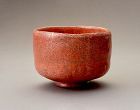
Sold, Thank You! Crafted with meticulous attention to detail and showcasing a rich, deep red glaze, this Raku tea bowl exudes a sense of warmth, vitality, passion, and energy. Adorned with subtle crackling patterns and variations in texture, the tea bowl's surface adds to its unique and organic feel. When held in the hand, you immediately notice a surprising lightness and pleasing proportionality, inviting a sensory connection with the tea-drinking experience...
Kyoto Ceramics and Fine Art
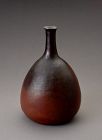
Sold, Thank You! During Japan's Momoyama period, spanning from the late 16th to the early 17th century, Bizen pottery flourished, producing exquisite pieces such as this “shimokabura” or radish-bulb-shaped sake flask (tokkuri). Crafted from locally sourced Bizen clay, this tokkuri embodies simplicity and understated elegance. Its unassuming form showcases the natural beauty of the clay, enhanced by a delicate ash glaze and distinctive markings achieved through specialized firing techniques...
Zentner Collection
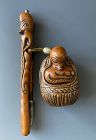
$2,500.00 Antique Japanese tobacco pouch and matching pipe case, each carved with an octopus. The pipe case is made all of boxwood and holds a tobacco pipe made of bamboo with silver and mixed metal fittings. The matching tobacco pouch is carved of kiri wood in the form of a fisherman's basket with a lid made of of boxwood and carved in the form of another octopus. Both practical and whimsical.
Age: Meiji Period (1868-1912) Dimensions: Pipe case: 8" long...
Zentner Collection
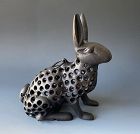
SOLD Antique Japanese cast iron lantern in the form of a rabbit. Sitting upright with long ears alert. The lantern is made to hold a candle, the light escaping through many round cast windows in the rabbit's body.
Age: Taisho Period (1912-1926) Dimensions: 10 1/2" high x 9 1/2" long x 5 1/2" wide
Zentner Collection
SOLD Antique Japanese cast iron lantern in the form of a cricket (or grasshopper). Crafted with long, elegant antennae. The lantern is made so it can sit over a light or candle, illuminating the cut out sections on it's wings.
Age: Taisho Period (1912-1926) Dimensions: 5 1/4" high x 11" long x 5" wide
Zentner Collection
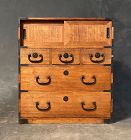
SOLD Antique Japanese small ko tansu (chest for personal storage). Made all of kiri (paulownia) wood. The chest has sliding panels on the top portion which open two a single compartment. Below this is a row of 3 small drawers over two full-width drawers. Hardware is made of cast iron.
Age: Taisho Period (1912-1926) Dimensions: 24 1/4" high x 22" wide x 13" deep
Zentner Collection
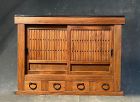
SOLD Antique Japanese single section mizuya tansu (kitchen chest). Made of sugi (cryptomeria) wood with details in keyaki (elm). Two large sliding panels with vertical slats open to a large compartment with a shelf. Below this is a horizontal row of four small drawers with round, iron handles...
Japanese : Tea Articles : Contemporary
item #1478882
(stock #TRC230526)
Kyoto Ceramics and Fine Art
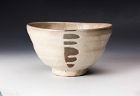
$1,500.00 Kohiki is a traditional Japanese pottery style known for its simple and rustic aesthetic... |



![An Excavated Mishima Tea Bowl with Maki-e Gold Repair [Tokugawa Clan]](https://images.trocadero.com/stores/KyotoArt/items/1479096/pict.jpg)