| Home | | | Items For Sale | | | Shops | | | Current Auctions | | | Auction Information | | | Auction Schedule | | | My Vervendi | | | Seller Registration | | | Bidder Registration (free) |
| Directory: Japanese: Textiles (1033) |
|
Auctions Shops Active In This Category
MAIN CATEGORIES
|
Zentner Collection
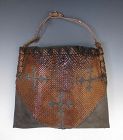
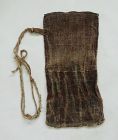
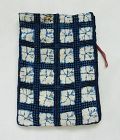
SOLD Antique Rare Ainu woven pouch, created by the indigenous people of northern Japan. The Ainu are well known for their especially beautiful attusi garments made of woven elm bark. This rare pouch is made of a variety of natural fibers, with reinforced corners and edges. The detailed patterns of the Ainu were past down through generations of women and were believed to protect the wearer from evil spirits. This pouch is beautifully constructed with another smaller woven pocket on the inside...
Haruko Watanabe
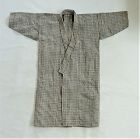
Sold. Thank you. A fisherman's work wear hand-woven of hemp for the weft and cotton yarn for the warp. Stripes are vegetable indigo dye and also natural color cotton yarn. It is from Tsushima in Nagasaki prefecture, an island located between Korean Peninsula and north Kyushu, and the textile is called Tsushima-asa. It had been woven till 1930s, but not woven since then, so it is precious, especially in this excellent condition one...
japanes antique textile saiyuu2
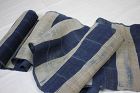
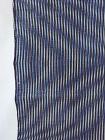
sold thank you Japanese antique natural indigo dye hand-spun Stripes hemp long Roll fabric.There is discoloration over time, but it has changed to a charming color. There is a slight damage to the edges. It is in very good condition.Size: Length: 596cm / 234.6 inches Width: 32cm / 12.5 inches
Haruko Watanabe
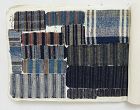
Sold. Thank you. Shima-cho, a sample book of cotton stripes with 182 fragments which are mostly hand-spun and vegetable dye. The book is "daifuku-cho", a record book of a merchant. It has the age Keio 2nd, 1866. 11 pages with fragments. The second half of the 19th century. 16cm x 22cm
Haruko Watanabe
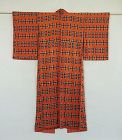
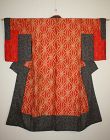
$120.00 Lined woman's kimono made of high quality silk crepe with geometric pattern which is katazome (stencil-resist-dye). In good condition except for a few minor stains. 1920s or 30s.
124cm x 148cm
Haruko Watanabe
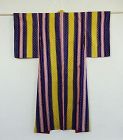
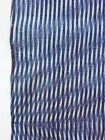
$100.00 Silk meisen kimono with colorful geometric stripes. It has thin cotton lining and red silk cloth in the hem of sleeves. In good condition except for a few mending patches in the lining. 1930s. 124cm x 150cm
japanes antique textile saiyuu2
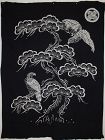
$980.80 This is indigo dye cotton tsutsugaki textile futon cover at the edo-Meiji era. Very auspicious, brave hawk and pine tree design. The material is thick indigo-dyed cotton. The technique of indigo dyeing Tsutsugaki is very good and beautiful. It is unused and has no stains or damage. The state is excellent. It is a very valuable gem. Please add it to the collection. Four panels are sewn together. Size: Length 168 cm (66.1 inches) / Width 126 cm (49.6 inches)
Haruko Watanabe
Sold. Thank you. A bag made of asa (hemp) and dyed with kakishibu (persimmon tannin). Warp and weft are hand-plied. It has and cotton lining. Late 19th to early 20th century. 27cm x 60cm
Haruko Watanabe
Sold, Thank you. A bag made of hand-spun cotton with shibori (tie-dye) and katazome (stencil-resist-dye) pattern which is vegetable indigo dye. It has cotton lining with kasuri pattern which is also hand-spun and vegetable indigo dye and thinly padded with cotton. Generally in good condition except for a few stains. The first half of the 20th century. 30cm x 41cm
Haruko Watanabe
Sold, Thank you. A piece of Iyo-zome cloth which was futonji (bedding). It is made of hand-spun cotton and has katazome (stencil-resist-dye) pattern. The name Iyo-zome is originated from Iyo sudare (bamboo screen) since the pattern looks like wood grain by looking through two layers of them. Stripes are dyed with two katagami (stencil paper), one is vegetable indigo and the other is natural brown dye. Two katagami are dyed by displacing them so that they make wood grain like pattern...
japanes antique textile saiyuu2
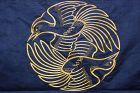
$380.00 This is Fukusa of beautiful hand embroidery made in Kyoto in the Edo era.(1800-1867)
As for the embroidery, the thread which gold leaf was rolled round is used and is made all by hand.
The surface does not have a stain and the damage. And there are a few stains to the lining. It does not stand out. This is embroidery of a lucky bird.
Size:Length:71cm(27.9inch ) / Width: 67cm( 26.3inch)
japanes antique textile saiyuu2
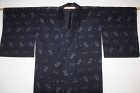
$168.80 It is a Japanese antique natural indigo dye old silk katazome kimono.
It is a Excellent condition.It does not have a stain and the damage.It is a pine and a pattern of igeta.
size:Length: 140cm (55.1") sleeve to sleeve 120cm (47.2")
japanes antique textile saiyuu2
sold thank you This is benibana-dye (Natural safflower dyeing)-shibori and katazome yosegire kimono textile of the Edo era(1800-1867).
It has a few thin stains. It has a small damage in several places. However, it is in a state good
The red shibori (Tie-dye)is very impressive and beautiful.
The pattern on the hem is a traditional Japanese treasure and has a very auspicious design.
Size: Size: Length: 140cm (55.1inch) / Cuff to cuff: 123cm (48.4inch)
Haruko Watanabe
Sold, Thank you. A piece of Iyo-zome cloth which was futonji (bedding). It is made of hand-spun cotton and has katazome (stencil-resist-dye) pattern. The name Iyo-zome is originated from Iyo sudare (bamboo screen) since the pattern looks like wood grain by looking through two layers of them. Stripes are dyed with two katagami (stencil paper), one is vegetable indigo and the other is natural brown dye. Two katagami are dyed by displacing them so that they make wood grain like pattern...
Haruko Watanabe
Sold. Thank you. Omi-e-kasuri (pictorial kasuri) with double kasuri pine and bamboo motif. It is handwoven of taima (hemp) and weft yarn with pine tree pattern is clamp-board dye so that the textile has white bar-code like lines in both selvedges. Both choma (ramie) and taima (hemp) textiles were woven from 12th century in Omi region in Shiga prefecture, but kasuri textiles were woven of taima (hemp). In excellent condition but the white lining has light stains and very light two spots in the upper back...
Haruko Watanabe
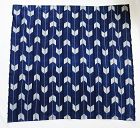
$280.00 Cotton cloth with kasuri Yabane (plume) pattern which is handwoven and vegetable indigo dye. Warps look machine spun but wefts are hand-spun yarn. It has very thick texture, probably domestically handwoven. The first half of the 20th century. 148cm x 136cm
Haruko Watanabe
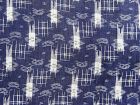
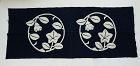
$220.00 Cotton cloth with tsutsugaki flower motifs which is hand-spun and vegetable indigo dye. Originally it might have been used as 'yutan' (cover for drawers or a chest) with crests, however this one is used for futon cover as it has cotton dusts in the back. In excellent condition except for a minor beige stain in the white part. The second half of the 19th century. 160cm x 65cm
japanes antique textile saiyuu2
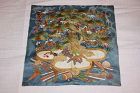
$6800.00 This is a Kake-fukusa in this Edo period( 1646-1710)is very excellent in the museum Item class.
It is konbuin kake-fukusa of the Kyoto museum and the one of the same class. All embroider it by the hand with silk.
The colors are all dyestuff of nature.There is a very thin stain. There is a very little rubbing. However, the state is very excellent.
It is made by the technology of workman's highest class in Edo period. It is original of Edo period. Please add to your collection...
|