| Home | | | Items For Sale | | | Shops | | | Current Auctions | | | Auction Information | | | Auction Schedule | | | My Vervendi | | | Seller Registration | | | Bidder Registration (free) |
| Directory: (25547) |
|
Auctions MAIN CATEGORIES
|
t a t a m i
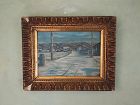
$300.00 RURAL WINTER Anonymous vintage Japanese oil painting on wooden board, attached with an original frame, as nostalgic snowy streetscape of somewhere in country side of old Japan, around Taisho period, early 20th century, Painting: 33 x 23.5 x 0.5 cm (12.99 x 9.25 x 0.19in), Frame: 44.5 x 35.8 x 4.5 cm (17.51 x 14.09 x 1.77in). Aged deterioration as is. Damage at frame as seen. *If you don’t want this frame (for reducing its EMS shipping cost or so), please let me...
t a t a m i
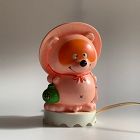
$300.00 RACCOON DOG TABLE LAMP Lovely vintage Japanese 80s pop sofvi (plastic) table lamp that is motif of traditional Shigaraki ware tanuki (raccoon dog) statue. Height 16 cm (6.29in), Bottom diameter 8.6 cm (3.38in). Scratches and slight stains due to age. selected by rust + antiques * Please understand that EMS shipping fee is additionally charged, and also confirm our Sales Policy before purchase, since your order...
tomoe art
$690.00 Large landscape/sansui painting depicted Mt. Fuji and mountain village. Painted with ink and pigments on silk. Signed setsuzan and sealed. It is attributed to Nagashio Setsuzan.
Nagashio Setsuzan(1774-1833) was a Kyoto born painter of the late Edo period(1603-1868). He became a private painter for the Mori clan of the Tokugawa shogunate in Izumo (Shimane Prefecture), and created paintings based on the Kano school. Some marks, severe crease, damage, foxing, fabric peeling off, and t...
The Kura
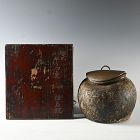
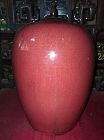
sold, thank you A spectacular collapsed pottery jar from the Karatsu tradition with a purpose-warped wooden lid covered in powdered silver enclosed in a top quality ancient red-lacquered kiri-wood box lined with wave-patterned colored-paper. The ancient box has silver lacquer writing on the top reading Kodai Karatsu Tsubo, Kamakura Ki, Mizusashi (Ancient Karatsu Tsubo, Kamakura Period, Mizusashi). The pot is 17 cm (7 inches) diameter, 15 cm (6 inches) tall and in overall excellent condition.
t a t a m i
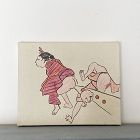
$200.00 FART Contemporary art work with such humorous old Taisho-period’s painting on ‘washi’ (Japanese paper) pasted on canvas. Super beam! 27 x 22 cm (10.62 x 8.66in). selected and made by Jinta * Please understand that EMS shipping fee is additionally charged, and also confirm our Sales Policy before purchase, since your order will be assumed to have fully acknowledged our Sales Policy under any circumstanc...
Zentner Collection
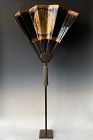
$3,750.00 Antique Japanese Uma-Jirushi, flag standard for battle. This uma-jirushi is in the shape of a large Sensu (folding battle fan). Made of gold and black lacquered paper and lacquered wood. The front and back with round circle motif in alternating gold on black on one side and black on gold on the other. Mounted on a metal stand.
Age: Edo Period (18th century) Dimensions: 51" high x 25" wide
Zentner Collection
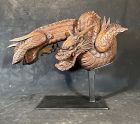
$6,500.00 This antique Japanese large flying dragon shrine corbel is a stunning piece of art that is sure to impress. The sculpture is made from one solid block of Keyaki (Zelkova) wood depicting a dragon that appears to abruptly change course in mid-air. The body has dramatic features that visually flow with this sculpture, making it a true masterpiece. The custom iron stand cradles the carving giving the appearance of floating in the air, adding to its allure.
Being a rare find, it would make a...
Zentner Collection
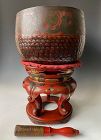
$8,750.00 This Antique Japanese Buddhist large temple bell set is a rare and exquisite piece of art that will add a touch of serenity to your home. The set comes complete with a stand, cushion, and striker, all made of Hinoki wood and finished in a beautiful red Urushi lacquer that has acquired a warm patina over its life. The stand features gold gilt accents that add to its elegance. The Tokugawa seal is repeated 35 times over the bell and stand, adding to its historical significance.
When struc...
Senatus Consulto
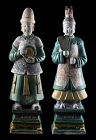
$2,350.00 A pair of large, high quality pottery figures of a male and a female attendant, dating to Ming Dynasty, 1368-1644 AD.
The figures are matching in the Green and Yellow Sancai colors and they are placed on large plints. The female figure carries a fan. She has been TL tested by Ralf Kotallas Laboratory and dates to ca. 1500 AD. The male figure is holding a Ying / Yang emblem in fron of his chest. Exceptional, almost museum quality, pottery figures with fine pigments ...
Conservatoire Sakura
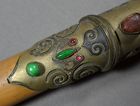
$1,800.00 The tube of the pipe is simply cut from a natural bamboo stem to which the artist has chosen to leave some secondary stem ends. The frame, mainly in bronze, is composed of several layers of metals, alloys of different colors, yellow , red-brown and grayish-black, finely cut with motifs, bats, swastikas and stylized Lingzhi,wishing 10,000 years of happiness and long life.
There are some jadeite beads embedded in the decor. The main bat has a body made of green jadeite and eyes made of what appea...
Modern Japanese Ceramics
sold, thank you Stratified layers fold over in a timeless rhythm on this covered box by Izumita Yukiya enclosed in the original signed wooden box titled Sekisoh Futamono. The laminated layers and uneven kiln texture folded over and over again, create a unique cadence on the baked earth which offers the viewer both urbanity and a view of the wilderness that resembles the strata of the earth. If one has ever walked the shoreline of Iwate where this artist lives, the influence is clear. The receptacle is 28 x 19 ...
Height approximately 24 cm. In good condition.
TRIKOMSA ART&ANTIQUES
$1,000.00 Height approximately 31 cm. There are 2 cracks from the rim to the body and 1 hairline at the rim.
Height approximately 32 cm (included the wooden lid). There are a few chips on the rim where the wooden lid supports and a few chips on the base. No hairlines, no cracks, no repairs. In good condition.
Conservatoire Sakura
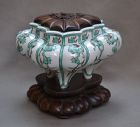
$9,500.00 Exceptional tripod censer in hard porcelain with a polylobed shape. The censer in the shape of a flattened melon with twelve slices, each decorated with a dragon painted on top in green, manganese and yellow enamels. Below Makuzu Kozan has chiseled his signature in relief which is very important, in fact it is much more complicated to chisel in relief than in hollow. In hollow all it takes is one pass of the tool to trace the characters while in relief you have to lower all the material around t...
Japanese : Woodblock Prints : Pre 1910
item #1487656
(stock #Hiroshige169)
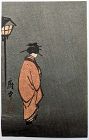
Hiroshige Ando (1797-1858)
Fuchu, Nichomachi (Titled in image) Size: Approximately 5.5 x 3.5 inches. Date: This posthumous edition is ca 1910. Publisher: Matsumoto Print Works. No. 419 publisher's tag on back. Medium: Japanese woodblock print. Condition: Excellent. Waviness corresponding to location of tag.
AfricAsia Primitive and Antiques
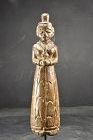
€275.00 Statuette of goddess Gauri standing in formal dress, with an unusual necklace supporting a cross. Wood, with fine glossy patina. India, 19th century. Height: 18.5 cm. The statue is nicely mounted on a custom stand. Abrasion due to age, otherwise good condition.
NOTE: Gangaur is a colourful festival which is one of the most important celebrations of the people of Rajasthan and the Fazilka district of Punjab. It is observed throughout the state with great fervor and devotion by womenfolk who wors...
tomoe art
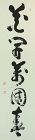
$800.00 Zen calligraphy: 花開萬国春(Hana Hiraku Bankoku no Haru) - A single flower opens and announces the arrival of spring to the world. Painted with ink on paper. Sealed.
The meaning of the word "flower bloom(花開)" in Zen wording is to become free of mind. It signifies the splendor of eternal time that can be felt by attaining the precious state of enlightenment. Yamada Mumon(1900-1988) was a zen monk from the Showa era. He studied under Kawaguchi Keikai and later studied at Ri... |