| Home | | | Items For Sale | | | Shops | | | Current Auctions | | | Auction Information | | | Auction Schedule | | | My Vervendi | | | Seller Registration | | | Bidder Registration (free) |
| Directory: Japanese: Tea Articles (1139) |
|
Auctions Shops Active In This Category
MAIN CATEGORIES
|
Momoyama Gallery
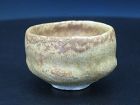
sold Mint Oni-Hagi masterpiece chawan with notched foot by star potter Seigan Yamane. This extraordinary tea bowl is covered by wonderful different shades of white and light green glaze. In my opinion it is the one of the most aesthetic chawans that he made. The seal of the artist is stamped on the bottom. Seigan Yamane was born in 1952, and started making Hagi ware in 1987...
Japanese : Tea Articles : Pre 1920
item #1458195
(stock #TRC220125)
Kyoto Ceramics and Fine Art
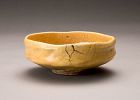
Sold, Thank You! A rare and exquisite piece by the 12th Kichizaemon (1857-1932) of the Raku lineage, now in its 16th generation. Not only with excellent documentation including a certification and endorsement by famed tea-master Sei-sai and a record from its sale at the Tokyo Art Club in 1938, there are many facets of this work that make it a must-have for serious collectors. The color is quite unique among Raku tea bowls with a distinctive yellow glaze that you rarely find on works such as this...
Momoyama Gallery
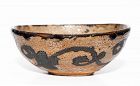
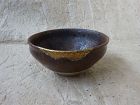
$995.00 An eye-catching combination of brown-black colors and old expertly applied gold repairs on a classic Japanese E-Karatsu tea bowl dating from the middle of the Edo-Period (1603-1868). Like many pottery traditions in Japan, Karatsu takes its name from the city where it originated. As early as the 15th century Korean potters heavily influenced the development of this form—helping to endow it with the earthy, simple, and natural qualities it is so appreciated for...
Momoyama Gallery
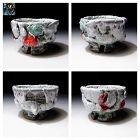
sold Mint and large Oni-Hagi masterpiece chawan with notched foot by star potter Seigan Yamane. This extraordinary tea bowl is covered by wonderful different shades of white, green and red glaze. In my opinion it is the one of the most aesthetic chawans that he made. The seal of the artist is stamped on the bottom. Note: This is a special work by him. He made only one piece with this design. Seigan Yamane was born in 1952, and started making Hagi ware in 1987...
Gallery Rex
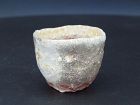
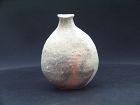
USD $384.00 This piece was fired for 10 days in the "anagama" old style kiln, with red pine fire woods. It's very beautiful with natural glaze by ashes and flame.
Size; 6.0cm(D)/4.5cm(H)
Accessary; wooden box signed by artist
Gallery Rex
sold similar piece available This piece was made of "mogusa" clay which was very precious, and covered deluster yellow glaze. It's old style "Kiseto"
Size; 8.0cm(D)/5.1cm(H)
Accessary; wooden box signed by artist
Momoyama Gallery
sold Pure Aka-Raku Chawan by the 9th generation Raku Ryonyu (Raku Kichizaemon IX) 楽了入 (9代 楽吉左衛門) enclosed in its originally signed and sealed wooden box and made around the beginning of 19th century about 200 years ago during the Edo era. This Raku chawan is particularly endowed with a structural power deriving from simple composition of features of a bowl - another reminiscence of the earlier generations of this unique family of artists. Ryonyu was the second...
Momoyama Gallery
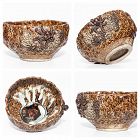
sold Outstanding Ohi Chawan from the early stage of the Meiji Era (1868-1912) with a rarely seen octopus and coral sculpture on it. The outer earthy amber glaze harmonises wonderfully with the colourful interior landscape of the bowl. A firework of colours running into each other. What an impressive demonstration of the artistry of this 19th century artist...
Haruko Watanabe
Sold, Thank you. Tenmokujawan, a tea bowl which is mended with kintsugi with seigaiha (wave pattern) makie. Tenmokujawan is a pottery tea bowl which is fired with Tenmoku glaze (iron glaze). It is made in Seto in Aichi prefecture, one of places where copies of Chinese potteries were manufactured. 17th or 18th century. Diameter:11.8cm, H:5.8cm
Momoyama Gallery
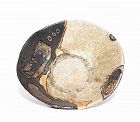
sold Japanese Yama Chawan (literally 'Mountain Tea Bowl'), biscuit firing ware with impressive natural glaze and slightly distorted form. It dates back to the Kamakura Period (1185 - 1333). Highlight is the inside design with a Japanese Koi image which was added by a former owner as a kind of Kintsugi to close a damage on the inside surface...
Gallery Rex
sold This piece is fired in anagama with red pine fire woods for 10days, and covered with natural ashes. The shigaraki clay has been colored to beautiful scarlet by the flames.
Size: 10.8cm (D) 13.5cm(H)
Accessary: wooden box signed by artist
Gallery Rex
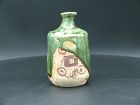
USD $366.00 This piece is made of shigaraki clay, covered shino glaze and painted by iron glaze and covered oribe glaze (oxidized copper). The oribe glaze has colored to very clear green.
Size: 8.4cm(D) 13.5cm (H)
Accessary: wooden box signed by artist
Momoyama Gallery
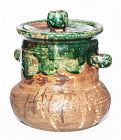
sold Important and extremely rare Mid Edo Period Narumi Oribe Mizusashi (fresh water container) in perfect antique condition with no cracks or repairs and with its original lid. It is almost impossible to find such an old and valuable Oribe Mizusashi - so take your chance. It comes with a very good Japanese wooden box. Narumi Oribe ware is comprised of white and red (reddish brown) clays. The white clays are glazed with green glaze...
Momoyama Gallery
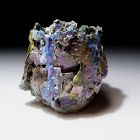
sold Artistic and expressive Chawan, sculptural and with a multiple color glaze, made of Mino clay by Norio Ishii. It is in mint condition and comes with its originally signed and sealed wooden box and a profile of the artist. Norio Ishii was born 1963 in Okayama city, Japan and he graduated from OKAYAMA ASAHI High school in 1982 and from Art department of KOCHI University in 1986...
Momoyama Gallery
sold We are proud to offer you a really rare antique piece of art and one of a kind: wonderful Echizen Chawan from the Momoyama Era (安土桃山時代 Azuchi Momoyama jidai; 1573–1603) without any crack, damage or repair. There is no similar item on the antique market. Echizen ware (called Echizen yaki in Japanese) is a type of pottery produced in the town of Echizen, Fukui prefecture...
Japanese : Tea Articles : Pre 1800
item #1456802
(stock #TRC2201224)
Kyoto Ceramics and Fine Art
Sold, Thank You! Over the years we have taken a special interest in Raku-ware and especially in works produced by the Tamamizu kiln, such as the 300+ year old ceremonial tea bowl seen here. The first in this line of potters was Yahē (1662 - 1722), an illegitimate son of Kichizaemon Ichinyu (1615 - 1768) who studied under his father and then left to open his own kiln in the village of Tamamizu (known today as Ide-cho)...
Japanese : Tea Articles : Pre 1837 VR
item #1456800
(stock #TRC230315)
Kyoto Ceramics and Fine Art
Sold, Thank You! Born the second son of Ryônyû, the 10th Raku Kichizaemon Tannyû took over the family kiln in 1811 at the age of 16 and served until his retirement and subsequent handing on of the title of Kichizaemon to his son-in-law Keinyû some 34 years later. Retaining many of the unique stylistic innovations of his father including his clay trimming technique, Tannyû went on to establish several new family kilns and to produce wares for both 10th and 11th Tokugawa Lords...
Japanese : Tea Articles : Pre 1920
item #1456418
(stock #TRC211102)
Kyoto Ceramics and Fine Art
Sold, Thank You! Meticulously crafted from carefully woven strips of bamboo, this traditional “chabako” would typically contain all of the basic utensils for conducting tea ceremony. As the same name is commonly used to describe wood boxes used to store and transport tea leaves, the piece below could also be described as a “chakago” to avoid confusion—though the former descriptor is much more commonly used. In practice, the box would contain a tea bowl, kensui, chashaku, chasen, chaire and several othe...
|