| Home | | | Items For Sale | | | Shops | | | Current Auctions | | | Auction Information | | | Auction Schedule | | | My Vervendi | | | Seller Registration | | | Bidder Registration (free) |
| Directory: Japanese: Tea Articles (1139) |
|
Auctions Shops Active In This Category
MAIN CATEGORIES
|
Kyoto Ceramics and Fine Art
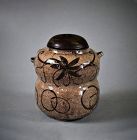
Sold, Thank You! The Muromachi period in Japan, known for its artistic and cultural flourishing, produced exceptional pottery and ceramics, including this exquisite e-Shino incense burner. Crafted with meticulous attention to detail, this piece exemplifies the refined aesthetics of the time. Its elegant form, featuring gentle curves and a graceful silhouette, reflects the harmony between nature and art...
Gallery Rex
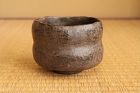
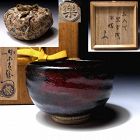
USD $4,490.00 Sugimoto is very famous for achievement of reproduction of Raku founder Chojiro piece, and now he has developed the method and he has made new excellent works.
Black raku chawan is regarded one of most important things in tea ceremony.
YouTube movie: https://www.youtube.com/watch?v=td_-c4Kp2W4
Size: 11.5cm(D) 8.4cm(H)
Accessary: double wooden box signed by artist
Momoyama Gallery
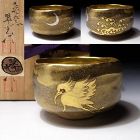
$750.00 A perfectly thrown and golden glazed contemporary Kutani Chawan made by one of the best Kutani-yaki artists, Hasegawa Suiko - please see! The beauty of the painted poetic motifs is simply breathtaking. Waves, a crescent moon and a toki, the Japanese crested ibis bird, so significant for Japan. The exceptional purity of the golden glaze is not found in any other work by Suiko as high class as in this tea bowl. Hasegawa Suiko, born in 1958, lives in Ishigawa Prefecture...
Kyoto Ceramics and Fine Art
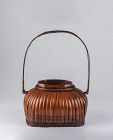
$2,500.00 Handwoven with delicate precision, this Japanese bamboo ikebana basket showcases the beauty of traditional bamboo weaving and the elegance of classic Chinese design that much of Japanese traditional art is based on. Its sturdy construction and balanced proportions make it perfect for ikebana arrangements, merging floral artistry with cultural aesthetics...
Japanese : Tea Articles : Contemporary
item #1478155
(stock #TRC230518)
Kyoto Ceramics and Fine Art
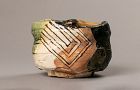
Sold, Thank You! A captivating blend of traditional aesthetics and contemporary flair; with exquisite attention to detail, Goro masterfully combines the vibrant green Oribe glaze with bold geometric patterns, creating a dynamic and visually striking piece. The bowl's elegant form and balanced proportions enhance the tea-drinking experience, while the unique surface texture adds depth and tactile pleasure...
Japanese : Tea Articles : Contemporary
item #1478106
(stock #TRC230426)
Kyoto Ceramics and Fine Art
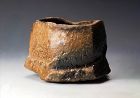
Sold, Thank You! An awe-inspiring masterpiece, this tea bowl by Kakurezaki showcases his unparalleled skill and artistic vision. Crafted with meticulous precision, the bowl seamlessly blends traditional Japanese ceramic techniques with a contemporary touch. The angled sides of the bowl's form invites the hand to explore it, while its carefully crafted texture offers a tactile experience that connects the user with the raw beauty of the clay...
Momoyama Gallery
$795.00 A magnificent Karatsu Katakuchi Chawan (Karatsu tea bowl with a pouring spout), fired around 1850 during the Edo Period (1603-1868). It is no exaggeration to say that this tea bowl needs to be described as a true museum quality piece of art. Especially such old Karatsu bowls are rarely available in the version of a Katakuchi bowl. Essentially, it's a bowl with a spout. But not just any bowl: its details are specially designed for the preparation of Matcha...
Momoyama Gallery
sold An impressive Kuro Raku Chawan made by the legendary 12th generation Kichizaemon Kônyû (1857-1932). The name of the Chawan is „Akebono“ - Sunrise. His childhood name was Kozaburo, later became Kicho (or, Yoshinaga). He was the eldest son of Keinyu, the eleventh generation master. In 1871, he succeeded the family business and became the generation master. In 1919 he retired and took the name as Kônyû. He enjoyed his retirement in practicing tea ceremony and writing haiku...
Momoyama Gallery
sold Antique solitary Awara-yaki chawan by great artist Kuze Tensei 久世天声 (1878 - 1933) around 1915 (Meiji Period). He studied art under Yamada Kei while working as a teacher at Ishikawa Technical Senior High School. In 1914, he moved to Awara Onsen in Fukui Prefecture (a classic hot spring town) where he set up a studio and kiln and created Awara-yaki using clay from the area to produce Kyo-ware style ceramics, which often won prizes in exhibitions...
Momoyama Gallery
sold Fantastic Seto Chawan made by greatest Kitaoji Ronanjin 70-80 years ago. Rosanjin (1883-1959) They say adversity is the mother of invention, and Rosanjin can be said to epitomize that expression. Born during the tumultuous first half of the Meiji period in the cultural center of Kyoto, he was adopted at age six by a woodblock carver...
Momoyama Gallery
$995.00 Seto Kuro Oribe (black oribe) kutsugata (shoe-shaped) chawan with a rounded brim, made in the late Edo Period around 1850.
This rare type of tea bowl was made from light, coarse, unrefined Mino clay which contains some iron oxide and and a rich black glaze (made from ground up Kamagawa stones) which partially obscures the white designs on the side.
The Chawan fits nicely in your hands and looks great filled with bright green matcha...
Momoyama Gallery
sold A beautiful Shino Chawan by one of the best Japanese artists of the 20th century, Yano Keisen, made 70 years ago. His ceramics were part of the wedding of the Japanese Emperor Akihito in 1959 and since then part of the imperial household. It comes with its originally signed and sealed wooden box without chips or cracks. Yano Keisen was a Japanese Asian Modern & Contemporary artist...
Momoyama Gallery
$1,800.00 One of a kind: Edo Period Ichimonji Utsushi Raku Chawan on high flared and cut (warikodai) foot by the 11th Zengoro Eiraku (Eiraku Hozen), made in the mid 19th century. A horizontal line is molded on the body, it's the Japanese character "ichi" - one!. (Please see last picture to see an antique Ichimonji Chawan in Korean style from the Ulrich Vollmer Collection Berlin). This is one of the rare tea bowls of Eiraku Hozen fired with a lower temperature in the style of Raku ceramics...
Momoyama Gallery
$650.00 Heavily distorted shoe shaped (kutsu) Kuro Oribe Chawan from the mid 19th century (late Edo) with a strongly flaring mouth made of light, coarse, unrefined Mino clay. The expertly thrown body was trimmed with a potters knife in its lower part and covered with a very deep black iron oxide glaze inside and outside. A window has been left unglazed and shows a typical Momoyama era design. The somewhat irregular foot reminds of the late production of Oribe tea bowls of the 1620-ies at th...
Momoyama Gallery
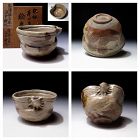
sold Late Edo (1603-1868) Period Shino Chawan with all highlights of the Japanese aesthetics of wabi sabi and a Zen buddhistic infinity symbol. It is in perfect antique condition and comes with an antique wooden box. Shino-ware dates to the Momoyama period when potters were attempting to recreate white porcelain-wares that were being imported from China at the time. Originally they were made in single-chamber anagama style kilns set into the hillsides. Later, with the advent of...
Japanese : Tea Articles : Pre 1950
item #1475841
(stock #TRC250413)
Kyoto Ceramics and Fine Art
$2,750.00 With pottery shards from excavated kilns dating back to the 5th Century, Mino-ware is one of the oldest and most revered pottery traditions in all of Japan. Though the piece featured here does not fit neatly into any of the typical categories of Mino pottery such as Kiseto, Setoguro, Oribe, or Shino; the shape and overall feel seem to place it quire firmly within this pottery tradition. Exceptionally well-proportioned and utterly unique, this tea bowl displays a dazzlin...
GALERIE TIAGO
Sold Matcha bowl in clay decorated with two hare, partly glazed.
A fine contrast between the unglazed foot, which retains the raw color and rough, matt appearance of the clay, and the rest of the bowl, which is partly glazed with a brown layer with a smooth and shiny appearance. The body is underglazed with two running hares and a sayagata motif (derived frow swastika, a symbol of good fortune).
Unidentified mark on the foot.
In Japanese, the hare and the rabbit are referred ...
Zentner Collection
$3,000.00 Antique Japanese gray porcelain tea cup with crackle glaze. Decorated with delicate floral design in iron-rich dark brown/black glaze. Kyoto Ware.
Age: 18th century Dimensions: 2 1/2" high x 2 5/8" wide Provenance: From the personal collection of Frederic Cheever Torrey (1864-1935), partner of Vickery, Atkins & Torrey, interior design firm and art gallery founded in San Francisco in 1888. The gallery, most famous for its role in helping to introduce Californ... |