| Home | | | Items For Sale | | | Shops | | | Current Auctions | | | Auction Information | | | Auction Schedule | | | My Vervendi | | | Seller Registration | | | Bidder Registration (free) |
| Directory: Japanese: Tea Articles (1139) |
|
Auctions Shops Active In This Category
MAIN CATEGORIES
|
Momoyama Gallery
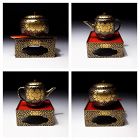
Sold Up for sale is this magnificent and high class set of a tea pot and a tea container made of wood and covered in lacquer with elaborate maki-e, applied with gold designs. Both pieces of art have perfectly fitting maki-e wooden stands...
Zentner Collection
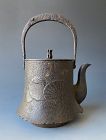
SOLD Antique Japanese cast iron tetsubin (kettle for heating water for tea). Made with a tall handle and bell-shaped body. Raised shells adorn one side with a raised abalone shell on the other. The intentional casting of rough edges adds a natural beach-like appearance. The lid is also made of cast iron.
Age: Meiji Period (1868-1912) Dimensions: 11" high (including handle) x 7" wide x 6 1/2" wide
Dragon's Pearl
$2,500.00 Big, oval shape bamboo flower basket, Hanakago, with a large mouth for use in important, large flower arrangements.
*Material: smoked Madake bamboo, rattan, lacquer...
Conservatoire Sakura
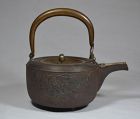
$600.00 Small cast iron tea-pot. One side is decorated with lotus flowers, the other side is without any decoration. The spout is doubled in bronze, the handle is in copper as well as the lid which has a decoration of small rounds in light relief of different patina, perhaps formerly gilded. The grip button is in silver plated copper and shakudo. It is likely that this type of jug was also used for alcohol as specified on the invoice issued by the seller in Kyoto which dates it to 1850...
Japanese : Tea Articles : Pre 1900
item #1473774
(stock #TRC230208)
Kyoto Ceramics and Fine Art
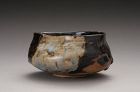
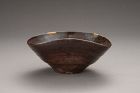
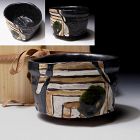
Sold, Thank You! Oribe is a visual style named after the late-16th-century tea master Furuta Oribe (1544-1615). Kuro Oribe pieces are the most common with their jet-black glazes and feldspar ornamentation tending towards the minimalistic, abstract; and, some would say, Zen-like aesthetic. While the piece shown here is not entirely typical of Oribe pieces, the black glaze, contrast window, and unmistakable kutsugata shape all point to this genre of Minō pottery...
Japanese : Tea Articles : Pre 1800
item #1473773
(stock #TRC230211)
Kyoto Ceramics and Fine Art
Sold, Thank You! Like many pottery traditions in Japan, Karatsu takes its name from the city where it originated. As early as the 15th century, Korean potters heavily influenced the development of this form—helping to endow it with the earthy, simple, and natural qualities it is so appreciated for...
Dragon's Pearl
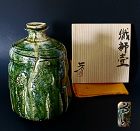
$1,500.00 A contemporary Hanaire, flower vase of Oribe yaki by Sone Yoshiyuki
Powerfully build vase in the distinctive colours of Oribe, fresh green glaze capturing the atmosphere of forest undergrowth and spring moss.
It comes with artist’s information paper, a stamped cloth and fully inscribed and signed storage box.
H 25 x 16 cm.
Perfect condition.
Sone Yoshiyuki (1951- ).
Born in Toki City, Gifu Prefecture. Graduated from the Ceramics Department of Tajimi Technical High School...
Japanese : Tea Articles : Pre 1700
item #1473641
(stock #TRC240207)
Kyoto Ceramics and Fine Art
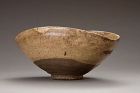
$3,750.00 At various times over the long history of tea practice in Japan, Korean-ware has come into high fashion and ships full of the finest ceramics from the neighboring country were brought to its shores. Such pieces have long been favored by learned cha-jin (tea people); and, older pieces such as this are quite prized today as relatively few from this era have survived in good condition...
Momoyama Gallery
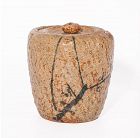
$1,500.00 A flawless and covered Japanese Mizusashi (cold water container/stoneware jug) for the tea ceremony from the early Edo period. This antique Seto Mizusashi is designed with floral motives and Japanese poetry and comes with a dedicated tomobako wooden box. Although the Japanese word for the tea ceremony, chanoyu, literally means “hot water for tea,” the practice involves much more than its name implies...
Japanese : Tea Articles : Contemporary
item #1473362
(stock #TRC230925)
Kyoto Ceramics and Fine Art
$1,500.00 An excellent offering from Higaki Ryota of Katsura Kiln, this piece displays a classic and iconic shape coupled with a beautiful Kase-guro glaze said to be used over 400 years ago by Chojiro. The color of this tea bowl changes quite dramatically, taking on the characteristics of its environment; light and cheerful in direct and bright lighting, more austere, deep, and reflective in standard tea room lighting...
Momoyama Gallery
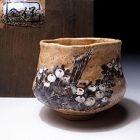
sold A beautifully crafted and remarkable example of Edo period Raku pottery...
Japanese : Tea Articles : Contemporary
item #1473097
(stock #08356)
t a t a m i
$600.00 ZEN ZEBRA Upside-down Japanese bamboo ikebana vase painted in black and white calligraphy, attached with aluminum plate on the top and pink corrugated urethane foam at lower part, made by Dai Okumura (@dai_okumura), 2023, H 74.5 x W 40 x D 30cm (29.33 x 15.74 x 11.81in) This is a form of 'Bi No Yo' (lit. 'Usage Of Beauty' - Adaptation from perfection) as a counter for the recognition of art called ‘Yo No Bi’ (lit...
Zentner Collection
$1,250.00 Antique Japanese tetsubin (pot for heating water for tea). Made of iron in round form and decorated with raised bats. The lid is made of bronze and signed on the underside.
Age: Meiji Period (1868-1912) Dimensions: 8 1/2" high (including handle) x 6" wide x 5" wide
Dragon's Pearl
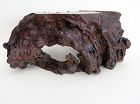
$800.00 A stand made of a fine piece of heavy, cypress wood emulating a rock. The top with a flat, smooth area on which to place items for contemplation or small ikebana arrangements. H 11 x L 24 cm.
Japan or China, most probably from around 1920.
Condition: Excellent with a wonderful patina.
Dragon's Pearl
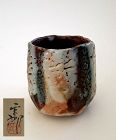
$900.00 Shino Yunomi shape tea cup made by the Hayashi Shotaro, one of the top names of contemporary Shino ceramics. The cup is covered in irregular and thick bands of Shino glazes in white, blue, pink, russet iron and lavender colours.
Measurements: H 9,5 x 8, 5 cm.
Signed at the bottom and inscribed and signed tomobako storage box; the documentation paper and stamped cloth are also included.
Perfect condition.
Hayashi Shotaro (b...
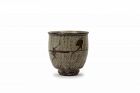
Celadon tea cup with corded patterns glazed in the Jômon zogan style made by Tatsuzô Shimaoka (1919-2007, Mingei school). Developed by himself, this style is inspired by ancient processes such as the Jômon string-printing technique (ca. 13,000 – 800/300 B.C.) and the Korean process of the Joseon period (1392-1897) of adding white slip with decorative indentations...
Momoyama Gallery
$495.00 A large Kuro-Oribe chawan, hand thrown and carved from fine Mino clay during the later Meiji Period (1868 - 1912). It comes with a very good Japanese wooden box. Oribe-yaki – I guess no other pottery had a greater influence on the aesthetics of Japanese pottery. Oribe ware is a historically important Japanese pottery variety that emerged during the late Momoyama and early Edo periods in Tajimi, in modern day Gifu prefecture...
Momoyama Gallery
$1,500.00 One of the extremely rare Raku tea bowls by one of the best artists in the history of Japan, Eiraku Hozen, made during the late Edo Period. Eiraku's style includes all ceramic techniques of China, Korea and Japan, which were appreciated at that time, such as Cochin, celadon, blue and white porcelain, Raku-yaki, Shunsui, Akae, Kinrande, Jinsei copies and Goryeo copies. With his diverse resources, he has created a new tea pottery that goes beyond mere imitation and reflects the taste... |