| Home | | | Items For Sale | | | Shops | | | Current Auctions | | | Auction Information | | | Auction Schedule | | | My Vervendi | | | Seller Registration | | | Bidder Registration (free) |
| Directory: Chinese (9242) |
|
Auctions MAIN CATEGORIES
|
Brian Page Oriental Art
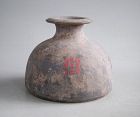
GBP £950 Fine & Rare Chinese Han Dynasty Inscribed Pottery Jar with Oxford TL Test
This very rare and fine-quality pottery jar was made during the Han Dynasty (206 BC - AD 220). It is skilfully potted, made from a fine-grained pale grey pottery that is quite highly-fired and has a very smooth surface. It has a wide, almost semi-spherical body with a short neck and flared mouth...
Brian Page Oriental Art
GBP £695 Fine & Rare Chinese Han Dynasty Inscribed Pottery Jar
This very rare and fine-quality pottery jar was made during the Han Dynasty (206 BC - AD 220). It is skilfully potted, made from a fine-grained pale grey pottery that is quite highly-fired and has a very smooth surface. It has a wide, almost semi-spherical body with a short neck and flared mouth...
Brian Page Oriental Art
GBP £695 Fine & Rare Chinese Han Dynasty Inscribed Pottery Jar
This very rare and fine-quality pottery jar was made during the Han Dynasty (206 BC - AD 220). It is skilfully potted, made from a fine-grained pale grey pottery that is quite highly-fired and has a very smooth surface. It has a wide, almost semi-spherical body with a short neck and flared mouth...
Brian Page Oriental Art
GBP £220 Chinese Song / Yuan Dynasty Buddhist Pottery Zodiac Jar
This interesting pottery jar was made during the Song Dynasty (AD 960 - 1279), or possibly the Yuan Dynasty (AD 1279 - 1368) and has been been excavated from a Buddhist site in Yunnan province. Various decorative methods have been applied to this jar. Strips of clay have been applied to the outer wall to form four lotus leaves. Within the lotus leaf panels there are appliqués of human figures...
2ezr
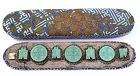
Inquire for Price 1900's Chinese Solid Silver Carved Turquoise Coin Shaped Bracelet Marked with Box
The box is 0.98 inch (2.5 cm) tall by 8.27 inches (21 cm) long and 1.85 inches (4.7 cm) wide. The bracelet is 6.89 inches (17.5 cm) in inner circumference by 1.3 inches (3.3 cm) wide. The bracelet is 35.5 gram. The total weight is 0.2 Lb. It is tarnished and has chips, a hairline crack and inclusions at the turquoise, and surface wears and scratches...
2ezr
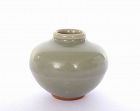
Inquire for Price Chinese Yuan Longquan Celadon Small Jar
It is 2.5 inches (6.4 cm) tall by 2.9 inches (7.4 cm) wide. It is 0.3 Lb. It has skip glaze, surface wears and scratches (as seen in the photos). Our Guarantee: We stand behind all of the items that we sell. That is to say, if you purchase an item from us and are unhappy with it for any reason, return it for a 100% refund of the amount you originally paid...
2ezr
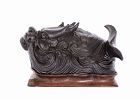
Inquire for Price 1930's Chinese Porcelain Imitation Bronze Dragon Fish Statue 独占鳌头 with Wood Stand
It is 5.7 inches (14.5 cm) tall with stand and 4.7 inches (12 cm) tall without stand by 9.4 inches (24 cm) wide. Total weight is 4.9 Lb. It has mild rubbing paints, dark spots, skip glaze, excess clay at the bottom, chip at the tail, hairline crack at the beard, surface wear and scratches (as seen in the photos). Our Guarantee: We stand behind all of the items that we sell...
Brian Page Oriental Art
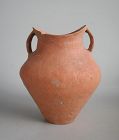
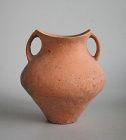
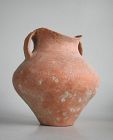
GBP £150 Chinese Neolithic Pottery Jar - Siwa Culture (c. 1350 BC)
This attractively-shaped pottery jar dates to the Siwa culture (c. 1350 BC), one of the later Chinese Neolithic cultures overlapping the Bronze Age. It has been quite highly-fired to an attractive orange-red and has a smooth surface making it a pleasure to handle as well as to view! It has a wide body with a relatively small flat base... Chinese Neolithic Pottery Jar - Siwa Culture (c. 1350 BC)
This attractively-shaped pottery jar dates to the Siwa culture (c. 1350 BC), one of the later Chinese Neolithic cultures overlapping the Bronze Age. It has been quite highly-fired, mostly to an attractive orange-red although, interestingly, in places the surface has fired to a grey colour. It has a wide body with a relatively small flat base... Fine Chinese Neolithic Pottery Jar - Siwa Culture (c. 1350 BC)
This attractively-shaped pottery jar dates to the Siwa culture (c. 1350 BC), one of the later Chinese Neolithic cultures overlapping the Bronze Age. It has been quite highly-fired to an attractive orange-red, the surface colour varying in places, and has a smooth burnished surface making it a pleasure to handle as well as to view! It has a wide body with a relatively small flat base...
Brian Page Oriental Art
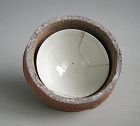
GBP £120 Chinese Northern Song Dynasty Qingbai Porcelain Bowl in Kiln Saggar
A rare opportunity to acquire a Northern Song Dynasty (AD 960 - 1127) kiln saggar still containing its Qingbai porcelain bowl, excavated from a kiln site in the Jingdezhen area of Jiangxi province. This is one of a variety of different Qingbai porcelain wares in saggars, mostly bowls and dishes of varying sizes and patterns, that we were very lucky to be able to acquire several years ago and now offer for sale. North...
Brian Page Oriental Art
GBP £120 Chinese Neolithic Qijia Culture Cord-Impressed Pottery Jar (4,000 Years Old)
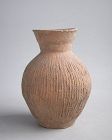
This pottery jar was made some 4,000 years ago by peoples of the Neolithic Qijia Culture (c. 2050 - 1700 BC), in the north of China, what is now eastern Gansu province. They produced a variety of pottery vessels including cord-impressed pottery of many shapes and sizes... Rare Chinese Neolithic Qijia Culture Cord-Impressed Pottery Jar (4,000 Years Old)
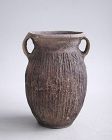
This jar was made some 4,000 years ago by peoples of the Neolithic Qijia Culture (c. 2050 - 1700 BC), in the north of China, what is now eastern Gansu province. They produced a variety of pottery vessels including cord-impressed pottery of many shapes and sizes. This particular example is made from a coarse gritty clay and more "heavily-potted" than some. It is of a rarer form that most known cord-impressed Qij...
Brian Page Oriental Art
GBP £185 Rare Chinese Neolithic Qijia Culture Cord-Impressed Pottery Jar (4,000 Years Old)
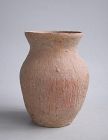
This attractively-shaped pottery jar was made some 4,000 years ago by peoples of the Neolithic Qijia Culture (c. 2050 - 1700 BC), in the north of China, what is now eastern Gansu province. They produced a variety of pottery vessels including cord-impressed pottery of many shapes and sizes. This particular example is made from a coarse buff-coloured gritty clay and is of a rarer form than most known examples, wi...
Gallery Rex
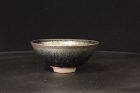
USD $2,758.00 This piece has some very beautiful oil spots that look like rainbows when exposed to sunlight or strong light. It's very rare phenomenon. One of oil spotted tea bowl "Yuteki tenmoku" is designated as national treasure in Japan, however this piece is small size.
Please refer YouTube movie. https://studio.youtube.com/video/Z5jX4ZYdVbI/edit
Size: 11.0cm(D)/ 4.8cm(H)
Certification: written by Noriki Shimazu the famous researcher with Asian antiques in Japan.
Chinese : Scholar Art : Pre 1900
item #1498924
(stock #167)
Dragon's Pearl
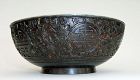
$2,500.00 A finely carved pair of coconut bowls with inserts of pure silver (with silver stamps). Decorated on the corpus with good-luck symbols and the attributes of the Eight Immortals. Both with a later Danish owner’s inscription reading: “G. Kina 24/12/1925.” China, Qing, 19th cent. most probably Daoguang period. H 5.5 cm, D 13 cm. Condition: Perfect.
Brian Page Oriental Art
GBP £150 Chinese Neolithic Pottery Jar - Siwa Culture (c. 1350 BC)
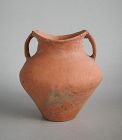
This attractively-shaped pottery jar dates to the Siwa culture (c. 1350 BC), one of the later Chinese Neolithic cultures overlapping the Bronze Age. It has been fired to an attractive orange-red and has a burnished surface making it smooth to the touch and a pleasure to handle. It has a wide body with a relatively small flat base. There are two loop handles joining the shoulder to the mouth which is of the form sometimes referred to ...
Brian Page Oriental Art
GBP £150 Chinese Eastern Han Dynasty Glazed Pottery Jar (AD 25 - 220)
This pottery jar of "hu" form was made during the Eastern Han Dynasty (AD 25 - 220) and comes from Shaanxi province in the northwest of China. It is made from a relatively highly-fired reddish pottery. It has simple incised decorative bands surrounding the body of jar. The outer surface is coated in a pale amber-coloured glaze. Height 17.5 cm. It is in very good condition with no restoration or repair and just a chip to the vul... |