| Home | | | Items For Sale | | | Shops | | | Current Auctions | | | Auction Information | | | Auction Schedule | | | My Vervendi | | | Seller Registration | | | Bidder Registration (free) |
| Directory: (25583) |
|
Auctions MAIN CATEGORIES
|
Zentner Collection
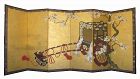
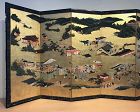
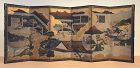
Price on Request Antique Japanese 6-panel byobu screen painting depicting a noble woman's carriage (gosho-guruma) parked under a blossoming cherry tree (sakura). The tassel cords are untied. The yoke rests on a black lacquered stool. The cart is decorated with irises and peonies with raised rimpa paint. The sudari is shut closed with chrysanthemum pattern curtains billowing out. Painted in mineral colors and raised gofun on gold leaf. Provenance: Warren Imports, La Jolla, California.
Edo Period (...
Asian Ethnic Artifacts
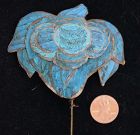
$250.00 During the Qing Dynasty, the feathers of the kingfisher bird were used to create ornaments for woman to attach to clothing and/or wear in their hair...
Through the 1800's These ornaments were made and formed with heavy paper (light weight cardboard...)
They had large areas of feathers and the edges of the paper form were bordered with gold paint...and the ornaments were often domed
By the early 1900's the bird were becoming rare almost extinct ...so intricate and smaller sections of fea...
Oldbailey Antiques
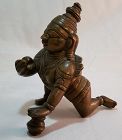
SOLD This well-cast bronze depicts the baby Krishna as "the butterball thief," referencing an episode from his childhood. The piece is solid-cast and measures some 3" in length and 3-1/2" in height. Well cast with excellent details, especially the face and jewelry. Please see the photos.
Oldbailey Antiques
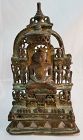
SOLD This sculpture includes an inscription on the reverse and is dated to "1427 Samvat," a date that places the sculpture in the 15th century. The piece has sustained a loss to the "edging" along the top (viewer's) right,as well as a loss adjacent to the "canopy," visible in the photograph. The casting quality is, in my opinion, outstanding,completely consistent with the early Jain classical style of sculpture. The piece has a beautiful, warm brown patina. It measures 6-1/4" in height.
Japanese : Woodblock Prints : Pre 1960
item #1404728
(stock #Hiratsuka003)
Era Woodblock Prints
$200 Hiratsuka Un-ichi (1895 ~ 1997)
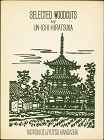
Selected Woodcuts By Un-ichi Hiratsuka Date: 1954 Publisher: Nippon Geijyutsu Hangasha This rare book contains 30 lithographic plates (23 black-and-white, 7 color) by the renowned sosaku hanga artist. English and Japanese text. Size: 14.25 x 10.5 inches. Medium: Japanese woodblock print. Condition: Very good. Light toning and foxing.
Japanese : Woodblock Prints : Pre 1960
item #1404725
(stock #3A153A)
Lilly Parker Antiques, Inc.
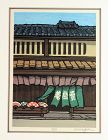
$125.00 Japanese Woodblock Printer "Nishima, Katsuyuki", Born 1945-, frame size - 16" x 12 1/2" and Image size - 12 1/2" x 8 1/2", "Good Day"(title), already framed by Kanda's B.O.Q. Gallery, signed lower bottom area in pencil, owner purchased in Japan and kept in their home until now. Framed in double mat and black wooden frame with rounded corners, non glare glass front. Introduction of the "Nishijima" and Frame shop information is on the back board, very professionally framed. The condition of fra...
Chinese : Peking Glass : Pre 1910
item #1404691
Zentner Collection
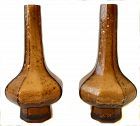
$4,500.00 An elegant pair of amber gold flecked Chinese Peking Glass vases. The 8 sided, octagonal vases have a long neck and recessed base.
Date: 19th century Dimensions: 8" X 4"
Zentner Collection
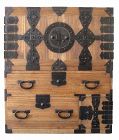
SOLD Antique Japanese kannon biraki isho tansu (chest on chest for clothing with hinged doors). Made with kiri (paulownia) wood on the front with sugi (cryptomeria) wood on the sides, top and interior. The top section has two hinged doors which open to reveal two interior drawers. The bottom section has two large exterior drawers of different sizes. The lower right hand corner has a safe box with a hinged door and two small interior drawers. One of the small drawers is shortened from the back f...
Zentner Collection
Price on Request A 19th Century Japanese six panel screen of Nara preparing for the Matsuri Wakakusa Yamigaki festival. This elegant bird's eye view of the city of Nara in the Edo period depicts a scree of village life in preparation for the traditional rice festival. Dancing and drinking are on display and the excitement fills the air with anticipation. The Nara temple is the major sponsor of the activities. The temple is open to patronage and veneration. This festival celebrates the rice harvest for the city. ...
Zentner Collection
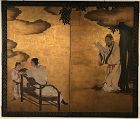
Price on Request Early 18th C Edo period Japanese byobu painted screen of scholars in retreat. It is composed of 2 panels. The screen has a predominate gold leaf ground on gofun paper. Paint composition is a mineral rimpa paint. The subject matter is a belief of mythology made real. Shu-ton (a scholar's attendant) found a longevity turtle that is believed to be 1000 years old. This turtle is also known to be a messenger to the gods. The expression on the master's face reflects wonderment. He is able to find an ...
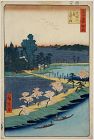
Japanese Edo period woodblock print titled “Azuma Shrine and the Entwined Camphor” (#31) depicting boats passing through the Jukkengawa Canal with cherry blossoms lining the embankment from the series “One Hundred Views of Famous Places in Edo” by Utagawa Hiroshige (1797-1858) published by Uoya Eikichi (Uoei) in 7/1856. Paper: nearly 14” x 9 3/8” (image: 13 3/8” x 8 5/8”). Very good color and overall condition. There are tape stains to the margin edges verso that show through ...
Zentner Collection
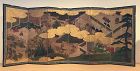
Price on Request Japanese 17th century Momoyama Period six panel Byobu painted screen of the Tale of Genji. This remarkable screen is in great form painted with rimpa polychrome mineral paint on gold gilt gofun paper. The composition is complex and it allows the viewers to have a bird's eye view of the scene and events amidst swirling clouds. The exaggerated foliage and scale of the courtly figures are dynamically composed with tranquility and balance.
The Tale of Genji is a masterpiece of Japanese lite...
Zentner Collection
Price on Request A mid-century 18th C Japanese Tosa school six panel byobu painted screen. Rimpa paint of gofun paper with gold leafed clouds dividing each of the scenes. The screen begins by exposing us to the art of seduction by listening to poetry. The proper approach to a desired lady was through poems written on scented paper of the finest quality by an elegantly dressed go-between of appropriate social ranking. Gifts are exchanged & elegant conversation is followed with the female dressed within layers of ...
Zentner Collection
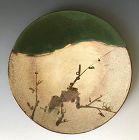
SOLD A medium sized Japanese Oribe dish with a rich, brilliant green glaze and plum blossom brush painting. The crackle in the glaze adds to the design and the edging is painted. The bottom is unglazed and has 4 indented strips. Invented in Japan in 1605, Oribe ware introduced vivid pattern and color to a ceramics tradition that had previously favored somber, monochrome designs.
Dimensions: 9.5" diameter Date: circa 18th C
Zentner Collection
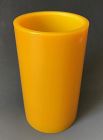
$2,000.00 Chinese monochrome yellow Peking Glass brush pot. Historically, many pieces of Peking glass were made with yellow glass (dubbed "Imperial Yellow") due to the colors' strong association with the Qing Imperial clan of Aisin Gioro. The glass was commonly used in vases and brush pots where it was used to imitate the harder to work jade and other precious stones.
Dimensions: 5.75" X 3.25" diameter Date:Republic c 1900
Zentner Collection
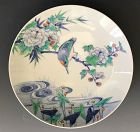
SOLD Japanese Nabeshima ware porcelain dish decorated with a bird on a branch looking over a pond of omodaka (water plantian). The dish stands on a high, deeply recessed foot with outer "comb" cobalt blue design around its edges.
Dimensions: 8" diameter Date: 19th Century
Zentner Collection
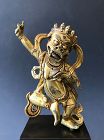
$7,500.00 A gilt bronze figure of Heruka with fierce rolling tongue expression, holding a chopper and skull cup. The deity stands in a warrior's pose with right knee up and pivoting. The flowing drapery suggests movement and dance rituals. The figure is mounted on a bronze base.
Heruka is the name of a category of wrathful deities in Vajrayana Buddhism. These enlightened beings adopt a fierce countenance to benefit sentient beings. In East Asia, they are called Wisdom Kings. Herukas repres...
Southeast Asian : Metalwork : Pre 1837 VR
item #1404604
(stock #071719B)
Oldbailey Antiques
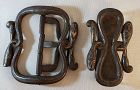
SOLD This is an 18th century, or early 19th century Balinese iron buckle, decorated with serpent motifs with gold inlay. There is some age-related rubbing with associated loss to the inlay, as would be expected. There is an inlaid calligraphic inscription to the back of the "fastener," which I have not had translated. The pieces measure, variously, 2-5/8" X 2-1/2" for the buckle, and 2-1/2" X 1-1/2" for the "fastener." The listing is for both pieces.
|