| Home | | | Items For Sale | | | Shops | | | Current Auctions | | | Auction Information | | | Auction Schedule | | | My Vervendi | | | Seller Registration | | | Bidder Registration (free) |
| Directory: Japanese: Ceramics: Earthenware (259) |
|
Auctions Shops Active In This Category
MAIN CATEGORIES
|
Gallery Rex
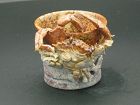
sold His name is Atsushi Hamada, expert potter Junri Hamada's son. He got an award of the encouragement prize in the Contemporary Tea-things Competition 2018.
This cup are carved crab with fine technique and has been fired with woods for a few days, it is covered with natural glaze not artificial glaze.
Size: 6.5cm(D) 5.8cm(H)
Accessary: wooden box with signature
Galerie Hafner
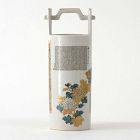
sold A water bucket shaped earthenware vase finely painted with micro calligraphy in Kanji (Chinese characters), paper slips and chrysanthemum flowers in moriage technique. Base with "Kutani" mark. Dating to Taisho period or later. Condition: minor wear to gilding and colors, interior with few traces of usage. Dimension: c. 22.3 cm high, diameter: 8.2 cm, weight: 500 g.
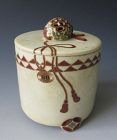
Antique Japanese Satsuma ware ceramic incensor. Cylindrical form standing on 3 rounded feet and with a flat, round lid. The lid is opened with a decorative tassel design with a pierced design for the incense smoke to escape. Overpainting is done in orange, green and gold over a delicately crackled cream color glaze. With antique collector's adhesive number.
Age: Meiji Period (1868-1912) Dimensions: 4 1/4" high x 3 1/2" wide
Zentner Collection
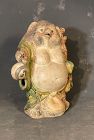
$1,100.00 An antique Japanese rare Tanuki (badger dog) that originates from the famous kiln region of Shigaraki, Japan. It was made in an Oribe glaze and it is shown holding a sake bottle in its right hand and a burl wood walking staff in its left hand. It is artist signed on the back.
The Tanuki is a shape shifter turning into various objects or people causing it to get into mischief and often comical adventures...
Zentner Collection
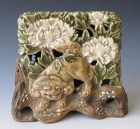
$900.00 Antique Japanese bush holder made of ceramic with highly raised scenes of fu-dogs, one glazed a buff color, the other blue. They stand with characteristic whimsical expressions on mossy rocks out of which bloom large peony flowers in white and pale pink. There are 5 holes in the top for brushes.
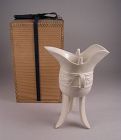
Age: Meiji Period (1868-1912) Dimensions: 4 3/4" high x 5 1/2" long x 2 5/8" wide The size of Koro: 5 7/8" Long x 4 3/16" Wide x 7 3/4" High. This is beautiful Japanese Shaku (Jue) Koro by Shou. Koro was made by same type fine quality crackle glaze earthen ware as Kyoto Awata Yaki or Kyoto Satsuma pieces. The Koro has intricately made with work around the body. The condition of Koro excellent, no chip, no crack and no hairline except noting one repaired spot on one of leg as two close up photo showing. The leg was snapped off cleanly at the side way...
Zentner Collection
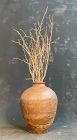
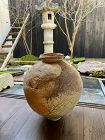
$1,200.00 An antique Shigaraki jar created and fired in this famous kiln region of Japan that was heavily potted. The skin shows the characteristic pock marks and imbedded fieldspar with a natural ash glaze. Originally used for tea storage, it has become a fine example of Japanese Wabisabi or understated elegance as well as an epitome of Mingei folk art.
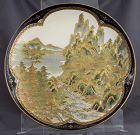
Age: Edo Era (1750-1800) Dimensions: 15 3/4" High by 13 1/4" Diameter Japanese Taisho to early Showa period Satsuma earthenware charger finely decorated in polychrome enamel and gilt with a single large foliate form cartouche set against a black background that extends to cover the back walls. The cartouche features a landscape scene with temples set among high mountain peaks. A bridge over water holds a single figure. The decoration is set against a cream colored finely crackled glaze background. Koshida workshop mark to the base...
Zentner Collection
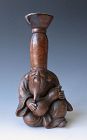
SOLD Antique Japanese small Bizen ware oil lamp in the form of Fukurokuju, one of the 7 Lucky Gods. Easily identified by his elongated head on top of which is a small bowl for oil. His expression is kind and he sits holding a large gourd (hyotan) in both hands. Fukurokuju is believed to be a sennin, a philosopher who can exist without eating food. His name literally means "happiness" (fuku), "wealth" (roku) and "longevity" (ju)...
Zentner Collection
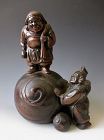
$850.00 Antique Japanese ceramic bizen ware sculpture of Ebisu and Daikoku, two of the most popular of the Lucky Gods. Diakoku, who is usually pictured standing on top of bales of rice, instead stands on top of a large ball. He is shown carrying a lucky mallet (Uchide no Kozuchi) and a bag of treasure which is thrown over his shoulder. He is the protector of agriculture, farmers, and rice merchants...
Kyoto Ceramics and Fine Art
Sold, Thank You! An exceptionally large work by one of the most important contemporary ceramic artists in Japan. Collected widely both here and abroad, a favorite of Daitoku temple in Kyoto who hold a number of his works. Pieces by this artist are held internationally by museums including: The Metropolitan Museum of Art, Stockholm Museum of Art, and the Urasenke Chado Research Center, Miho Museum.
Trained in a Zen temple before becoming a potter, Tsujimura Shiro (b...
Zentner Collection
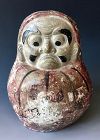
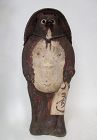
SOLD Antique Japanese painted ceramic figure of seated Daruma. Made from a mold and painted, this is an unusually expressive and detailed depiction of Bodhidharma, the monk founder of Zen Buddhism. He has his traditionally intense expression and, in this case, his robes are decorated with flowers. Daruma is a popular good luck symbol for prosperity and perseverance.
Age: Meiji Period (1868-1912) Dimensions: 10" high x 7 1/2" wide x 7" deep.
Zentner Collection
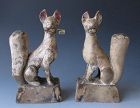
SOLD Japanese antique pair of small Inari Shinto shrine foxes made of pottery with traces of Mica in the clay. Originally painted, these foxes still have traces of bright pigment. Also called Zenko, these good spirit Kitsune (foxes) are specifically associated with the Goddess, Inari.
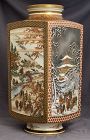
Believed to be both messengers and guardians, Kitsune served Inari in her role as the Goddess of agriculture, specifically rice... Massive 18” high Japanese Meiji period “cong” form Satsuma earthenware vase finely decorated on the four rectangular sides in polychrome enamel and gilt highlights with vertical scenes of figures in landscapes featuring the four seasons. The base holds a square four-character “respectfully made by Ryuzan” mark. Circa 1900. 18” high, 7 1/2" square; weight: 17 lbs. Very good overall condition with some typical wear to the overglaze pigments and gilt, particularly at the rim...
8tiger
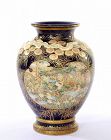
Inquire for Price Japanese Satsuma Vase with Flower Marked "Kinkozan", circa 1920
It is 7.5 inches (19.1 cm) tall by 5.3 inches (13.5 cm) wide. It is 1.8 Lb. It has rubbing of gold and surface wears (as seen in the photos). Our Guarantee: We stand behind all of the items that we sell. That is to say, if you purchase an item from us and are unhappy with it for any reason, return it for a 100% refund of the amount you originally paid...
Zentner Collection
SOLD A Japanese Tanuki garden statue made of Shigaraki pottery...
Lilly Parker Antiques, Inc.
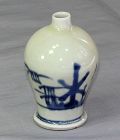
$95.00 Japanese Seto Earthenware Blue and White Tokkuri, small Sake Bottle, 3 1/2" high, 5/8" diameter-top rim, 1 3/4" diameter-bottom rim, transparant Celadon thick glaze over underglaze Blue and White decoration of trees and plants, unglazed bottom with bombed pattern, small flake chip on the bottom.
C.P.Sheffield
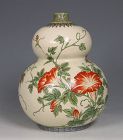
Sold A Satsuma Tokkuri. Of double gourd form very well decorated with flowering Morning Glory. The base with a three character Satsuma mark in green enamel. Japan Meiji. Height: 7" ( 17.7 cm). Condition: excellent
|