| Home | | | Items For Sale | | | Shops | | | Current Auctions | | | Auction Information | | | Auction Schedule | | | My Vervendi | | | Seller Registration | | | Bidder Registration (free) |
| Directory: Japanese: Sculpture: Bronze (106) |
|
Auctions Shops Active In This Category
MAIN CATEGORIES
|
Conservatoire Sakura
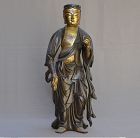
Price on Request Kwannon in Gilded Bronze. Japan Muromachi 16th century.
The deity is represented standing, draped in a long robe with angular folds. The statue was built in several parts, cast separately, in bronze, with lost wax, then assembled by riveting and welding. We can see a rivet on a photo. This technique was used during the period of medieval Japan, particularly in the Kamakura period...
GALERIE TIAGO
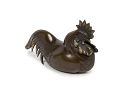
SOLD Okimono bronze sculpture of a reclining rooster.
In the Kojiki (lit. “Records of Ancient Matters”), a collection of myths about the origins
of Japan, the rooster manages to lure the solar deity Amaterasu out of her cave by
using his song and a magic mirror.
Japan – Meiji era (1868-1912)
Width: 3.1 in (8 cm) – depth: 7.9 in (20 cm) – height: 4.3 in (11.8 cm)
GALERIE TIAGO
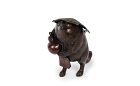
Sold An okimono bronze sculpture representing a pilgrim tanuki. He is standing on his rear
paws and has a damaged straw hat on its head, seemingly advancing with a sheepish
face. He is keeping its accounting book hanging around his neck (sake-dôri, 酒通) and
its gourd full of liquor. This okimono emphasizes a rather comic image of the tanuki,
thought to be an tremendous alcohol user...
Kodo Arts
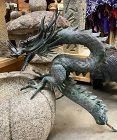
Price on Request Spectacular large bronze Japanese bronze garden spout used for the entrance to a shrine or temple to rinse and purify hands and mouth before entering. total length 29".
Great condition. Ask for shipping quote.
Momoyama Gallery
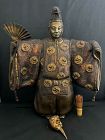
sold A large 21'' (55cm) high Japanese bronze Okina statue from the late 19th century. It is in good overall condition, with minor age-related marks, including surface wear and patina, which enhance its antique appeal. The fan and mask are included as accessories, while the tea whisk seen in the photos is for scale reference only and is not part of the item...
Conservatoire Sakura
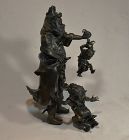
$7,800.00 Shoki(Chang Kuo)and demons in bronze stained with gold. Edo Japan.
The terrible divinity is represented standing preparing to kill a demon child that he holds firmly by the collar. The sculpture is superb, Shoki is theatrical his face is caricatured, the child is panicked and wriggles desperately as for the demon mother, she falls to her knees to implore the pity of the god. Despite being an evil demon this tense, offered, imploring mother is moving...
2ezr
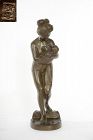
Inquire for Price 1920's Japanese Kano Seiun 加納晴雲 Bronze Nude Geisha Holding Baby Okimono Signed
It is 18 inches (45.72 cm) tall by 5.5 inches (13.97 cm) wide. It is 12.5 Lb. It has minor oxidation and surface wears and scratches (as seen in the photos). Our Guarantee: We stand behind all of the items that we sell. That is to say, if you purchase an item from us and are unhappy with it for any reason, return it for a 100% refund of the amount you originally paid...
AntiqueTica.com
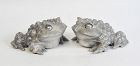
$900.00 A pair of Japanese bronze toads.
Age: Japan, Contemporary
GALERIE TIAGO
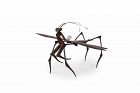
Sold Jizai okimono of an articulated hammered copper praying mantis.
The praying mantis (in Japanese, kamakiri) is considered an auspicious symbol.
Japan – Meiji era (1868-1912)
Height: 3.15 in / 8.5 cm – width: 3.94 in / 10.5 cm – depth: 4.72 in / 12.5 cm
GALERIE TIAGO
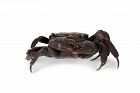
Sold Jizai okimono of an articulated crab in bronze with dark brown patina.
Japan – Meiji era (1868-1912)
Height: 2 in / 5 cm – width: 7 in / 18 cm – depth: 3.9 in / 10.5 cm
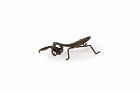
Dark brown patina bronze sculpture of a praying mantis.
The praying mantis (in Japanese, kamakiri) is considered an auspicious symbol.
Japan – Meiji era (1868-1912)
Height: 0.79 in / 2.3 cm – width: 1.18 in / 3.5 cm – depth: 3.15 in / 8.8 cm
GALERIE TIAGO
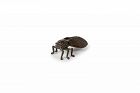
SOLD Bronze sculpture with dark brown patina of a cicada.
The cicada (in Japanese, semi) is considered as a symbol of humanity. Together with a praying mantis and a spider, they represent the three virtues of a general: humanity, courage and skill.
Japan – Meiji era (1868-1912)
Height: 0.79 in / 2.5 cm – width: 0.79 in / 7.5 cm – depth : 1.96 in / 5 cm
GALERIE TIAGO
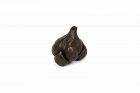
Sold Okimono bronze sculpture of a garlic head with a few cloves visible.
Unidentified mark on the base, most likely from the foundry.
Japan – Meiji era (1868-1912)
Width: 2 in (5 cm) – depth: 1.5 in (4 cm) – height: 1.8 in (4.7 cm)
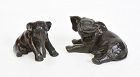
A pair of Japanese bronze elephants with artist sign.
Age: Japan, 20th Century
GALERIE TIAGO
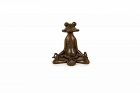
Sold An amusing okimono for use as an incense-burner, in brown patina bronze of an anthropomorphic frog in seated meditation (zazen) or in the lotus yoga position. In the middle of the lotus is a hole for the incense stick.
Representations of this animal in human posture are not uncommon. In the 19th century, the painter Kawanabe Kyôsai (1831-1889) was already depicting frogs in epic battles or everyday scenes. Even earlier, the Chôjû-jinbutsu-giga (lit...
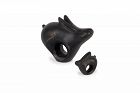
Pair of bronze rabbits running, their legs forming a round shape.
Made by Hiroharu Hiramatsu (1896 Hyôgo prefecture – 1971, Fukushima,平松宏春). Specialized in metal art, he is a councilor of the Japan Fine Arts Exhibition. He studied with Katsura Mitsuharu (1871-1962), one of the great metallurgists of the modern era...
Abhaya Asian Antiques
$150.00
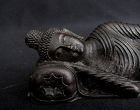
Lovely vintage reclining solid cast image of the Buddha lying on his deathbed about to enter Parinirvana, circa mid-20th century, from Japan or possibly Korea. He has serene expression and the multiple folds in his robe are particularly well done. L: 14.5cm/5.8in.
GALERIE TIAGO
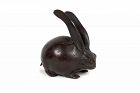
SOLD Small round hare in bronze with dark brown patina, standing on its four legs.
In Japanese, the hare and the rabbit are referred to by a single word: usagi. The animal is one of the twelve animals of the zodiac in Sino-Japanese astrology. It also plays a role in many folk tales and legends...
|